When Should a Landscaper Rework a Garden Oaks Yard Near W 43rd St?
A landscaper should rework a yard near W 43rd St when the same problems keep returning after normal maintenance: water ponds after rain, turf stays thin, mulch washes away, plants decline in the same spots, or irrigation zones do not support healthy growth. One isolated issue may call for a focused repair. Several connected problems usually point to a need for a coordinated landscape plan.
The street reference helps identify the service area, not the condition of any particular property. Sun exposure, mature trees, soil compaction, drainage paths, and existing irrigation can differ substantially from one yard to the next. Houston Heights Landscaping can assess those site-specific factors before recommending a limited correction or a larger rework.
Quick Answer
Rework the yard when maintenance is treating symptoms without fixing the reason they recur. Start with drainage, downspout discharge, irrigation coverage, soil condition, shade, and tree-root competition. A targeted project makes sense when one area is failing and the surrounding landscape performs well. A broader redesign is more practical when several systems conflict, such as ponding water, failing grass, eroding beds, and uneven irrigation.
Which recurring signs point to more than routine maintenance?
A little seasonal leaf drop, a few weeds, or a plant that has reached the end of its life does not automatically require a redesign. Repeated failure in the same area deserves a closer look because the visible symptom may not be the root problem.
| What you notice | Possible causes to consider | What an on-site inspection can confirm | Likely next step |
|---|---|---|---|
| Water remains in one area after rain | Poor drainage path, compacted soil, low spot, downspout discharge | Grade, surface flow, soil infiltration, drain condition | Drainage or grading correction before new planting |
| Turf is thin or bare under trees | Shade, root competition, irrigation gaps, worn soil | Hours of light, root exposure, irrigation coverage, soil condition | Bed conversion, shade-tolerant planting, turf adjustment, or maintenance change |
| Mulch repeatedly washes onto walks | Runoff, bed-edge failure, slope, misplaced downspouts | Water path, edging condition, slope, discharge location | Redirect runoff and rebuild the bed after the cause is addressed |
| Shrubs decline in the same spots | Overwatering, underwatering, poor drainage, unsuitable light | Moisture pattern, plant placement, irrigation performance | Adjust irrigation, improve soil, or select plants for the location |
| One irrigation zone produces uneven growth | Clogged or broken heads, leaks, overspray, controller settings | Pressure, head placement, zone coverage, leaks | Repair and recalibrate the zone before replacing plants or grass |
| Weeds return quickly after cleanup | Thin turf, bare soil, compaction, poor plant coverage | Soil exposure, turf density, drainage, light conditions | Improve coverage and growing conditions, not just repeated removal |
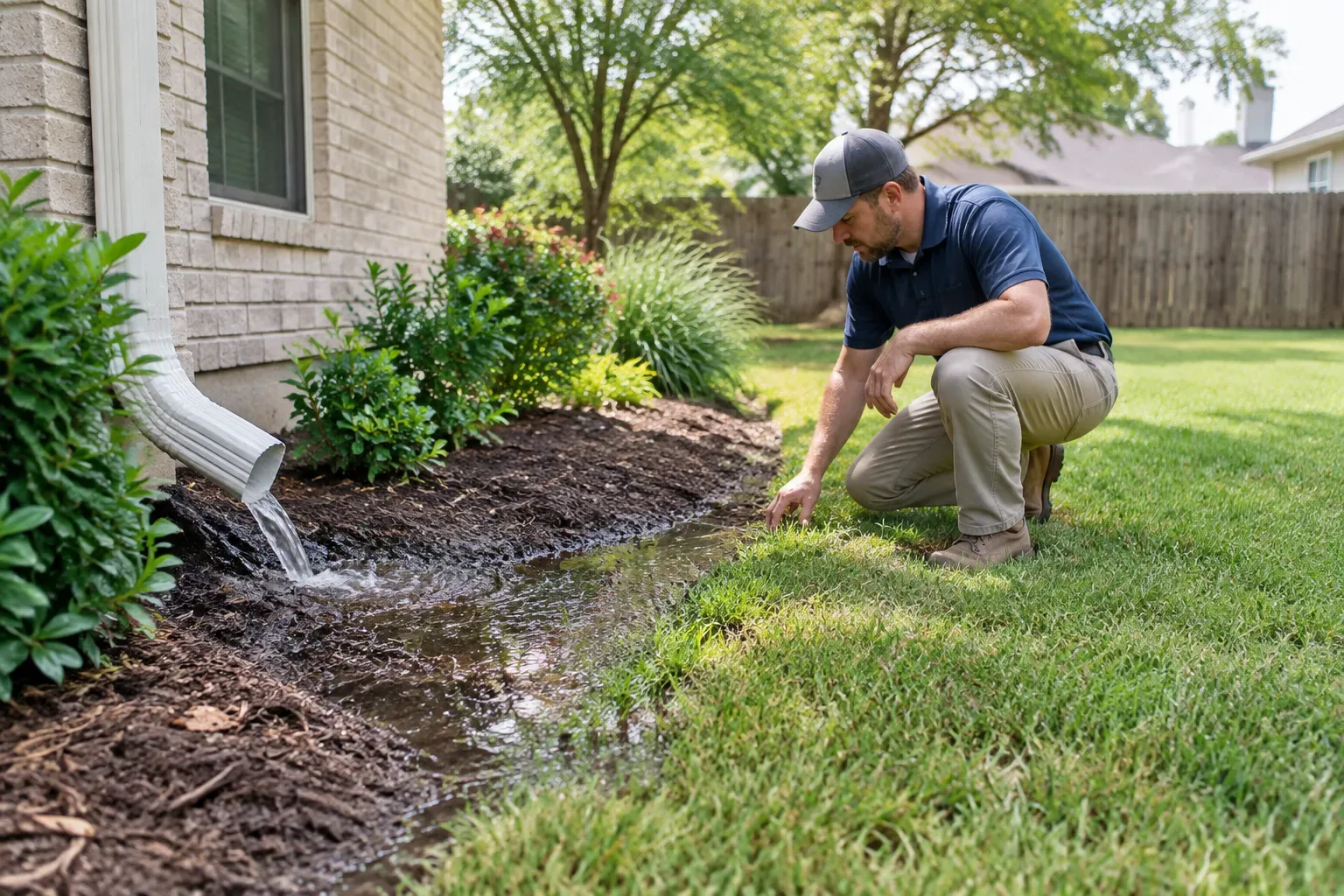
Houston rain events can expose drainage weaknesses quickly. Ponding, erosion, or mulch moving toward a walk may reflect compacted soil, inadequate grading, clogged drainage components, or a downspout that discharges in the wrong place. The symptom alone does not prove which condition exists.
Is a targeted yard rework enough, or is a full redesign smarter?
The right scope depends on how many systems are underperforming and whether one repair will interfere with a later improvement. A sound lawn with one washed-out planting bed may only need bed and drainage work. A yard with runoff issues, poor turf performance, aging plantings, and irrigation gaps may benefit from planning those changes together.
Targeted correction
Best for one clearly limited problem, such as a failing irrigation zone, an eroding bed, or a small turf area with an identified cause. It preserves working parts of the landscape and focuses the budget where it can solve a verified issue.
Coordinated yard redesign
Best when drainage, planting, turf, irrigation, and outdoor-use areas affect one another. It can sequence improvements so new grass, beds, pavers, and drainage work do not have to be removed or redone later.
A larger project is not automatically better. It is the better choice only when separate fixes would create incompatible grades, block drainage routes, duplicate site preparation, or leave the main cause unresolved.
Why should drainage and irrigation be checked before new plants or grass?
Water management affects nearly every landscape decision. Too much water can limit root health and move soil or mulch. Too little water, or water delivered unevenly, can leave turf and plants stressed even when they were installed correctly.
Inspect downspouts, visible drainage routes, low areas, standing water, sprinkler heads, leaks, overspray, controller settings, and zone coverage before choosing replacement material. Houston's hot, humid summers and periodic dry conditions make correct irrigation coverage and practical watering routines especially important for establishing new plants and grass.
The EPA's water-smart landscaping guidance supports a site-based approach that combines appropriate plants, efficient irrigation, soil improvement, mulch, and ongoing maintenance. That approach is more useful than assuming every struggling plant simply needs more water.
For a zone that appears to miss part of the lawn or overspray onto hard surfaces, review sprinkler installation and repair in Houston as part of the planning conversation. A sprinkler issue may be one contributor, but an inspection should also rule out shade, compaction, drainage, and plant-placement problems.
Could shade or tree roots be the real reason grass keeps failing?
Yes. Mature trees can reduce the sunlight available to turf while competing for moisture and root space. Thin grass beneath a canopy is an observable condition, not proof that the grass was installed incorrectly or that irrigation is the only issue.
A site review should map full-sun, partial-shade, and deep-shade areas before selecting turf or ornamentals. It should also account for exposed roots and avoid treating a root-related grade problem as a simple cosmetic defect. Depending on the conditions, the practical alternative may be a shade-tolerant planting area, a bed conversion, adjusted maintenance, or a smaller lawn area rather than repeated turf replacement.
Tree damage or a potentially hazardous tree is separate from ordinary landscape redesign. If a tree presents a safety concern or has storm damage, it may require evaluation by an appropriately qualified tree professional.
What should happen during a Garden Oaks yard assessment?
A useful assessment is not just a walk-through to pick plants. It should connect the visible trouble spots to site conditions and to how the outdoor space needs to function.
- Photograph recurring issues after rain and during dry weather, including standing water, erosion, bare turf, and declining plants.
- Mark sprinkler heads, drains, downspouts, utility features, tree roots, and areas where water enters or leaves the yard.
- Note how each area is used, such as play space, pets, entertaining, parking access, pathways, or a low-maintenance planting zone.
- Identify full-sun, partial-shade, and deep-shade sections at different times of day.
- Discuss maintenance preferences, watering habits, priorities, and a realistic budget range before choosing a project scope.
- Sequence drainage, irrigation, soil preparation, hardscape, turf, and planting work so completed areas are not disturbed later.
If the goal includes new planting areas, pathways, front-yard improvements, or a revised backyard layout, landscape design and installation services can help frame the project around the full site rather than a single symptom.
When should pavers, edging, or other hardscape be part of the plan?
Hardscape can be useful when it solves a real use or maintenance problem. A defined path can keep foot traffic off fragile turf. Pavers can create a durable outdoor-use area. Proper edging can help separate mulch from lawn, although edging alone will not correct runoff that is moving through a bed.
The common mistake is adding a patio, path, or border without considering finished grades and water flow. Hard surfaces can redirect water, so drainage needs to be considered before installation. For projects that include walkways, patios, or other durable outdoor surfaces, explore Houston hardscaping options alongside the planting and drainage plan.
How do you know the work will hold up after installation?
Installation is the start of establishment, not the end of the work. Newly planted beds and grass need a practical watering plan, mulch management, mowing or pruning at appropriate times, weed control, and seasonal observation. Irrigation settings may need adjustment as plants establish and weather shifts.
Ask for clarity about what will be inspected, what is being corrected first, and what follow-up care the new landscape will need. Reviewing the company's latest project page may also help you prepare questions about layout, materials, and the type of outdoor use you want to support.
What is the most practical next step before reworking the yard?
Document repeat patterns, then request an on-site conversation before buying turf, plants, mulch, or hardscape materials. The goal is to identify which part of the yard is truly failing and whether the condition is within landscape scope. For example, persistent water near a structure, a suspected underground utility issue, or a hazardous tree may require a different specialist or additional evaluation.
For ordinary landscape concerns, a well-planned rework can be modest and focused. The most valuable decision is often correcting the water, soil, shade, or irrigation condition first, then choosing plants and materials that fit the corrected site.
Ready to discuss your project?
Request a Garden Oaks yard assessment to identify whether recurring trouble near W 43rd St calls for a focused repair or a coordinated rework.
FAQ
How often should a Houston yard be redesigned?
There is no fixed redesign schedule. Rework is usually justified by repeated performance problems, changing outdoor use, mature-tree shade, storm damage, or a landscape that no longer matches the maintenance level you want. If the lawn, beds, and irrigation are performing well, routine seasonal maintenance may be enough. A site assessment is more useful than redesigning simply because a certain number of years has passed.
Can I replace only the grass instead of redoing the whole yard?
Yes, if the problem is limited to the lawn and the site has adequate drainage, suitable light, prepared soil, and functioning irrigation. Replacing grass without checking those conditions can lead to another thin or bare area. Houston landscaping services can help evaluate whether lawn replacement is a stand-alone project or part of a larger correction.
Why does mulch keep washing out of my flower beds?
Mulch movement often signals runoff, steep bed edges, poor drainage, or downspouts discharging too close to the bed. More mulch may temporarily improve appearance but will not change the water path. Look for where water starts moving, where it concentrates, and whether it crosses a walk or foundation-adjacent area. A drainage-focused adjustment may need to happen before the bed is rebuilt.
Is thin grass under a large tree always an irrigation problem?
No. Irrigation coverage can contribute, but thin grass under trees may also result from shade, root competition, compacted soil, or foot traffic. An inspection should compare sunlight, root exposure, soil condition, and sprinkler coverage before deciding on a remedy. In some locations, a planted bed or shade-adapted approach may be more realistic than repeated turf replacement.
Should I repair sprinklers before installing new plants?
Usually, yes. Broken heads, leaks, poor coverage, and incorrect controller settings can undermine new planting and turf establishment. Repairing and adjusting the system first gives the installation a more reliable watering plan. See the sprinkler service page for the types of irrigation concerns that can be addressed as part of a landscape evaluation.
Can heavy rain mean my yard needs drainage work?
It can, but rain alone does not prove a drainage defect. Watch for recurring ponding, erosion, mulch displacement, water flowing toward structures, or areas that stay saturated longer than surrounding ground. Those symptoms warrant an inspection of grade, downspouts, drains, soil infiltration, and surface flow. The best correction depends on what the site review confirms.
What should I bring to a landscaping consultation near W 43rd St?
Bring photos of the problem during different weather conditions, a list of areas that concern you, and notes about watering, mowing, past repairs, and how you want to use the space. It also helps to identify non-negotiables, such as preserving a tree, creating a path, reducing lawn area, or improving drainage near a specific spot. Those details help distinguish a focused repair from a broader redesign.