
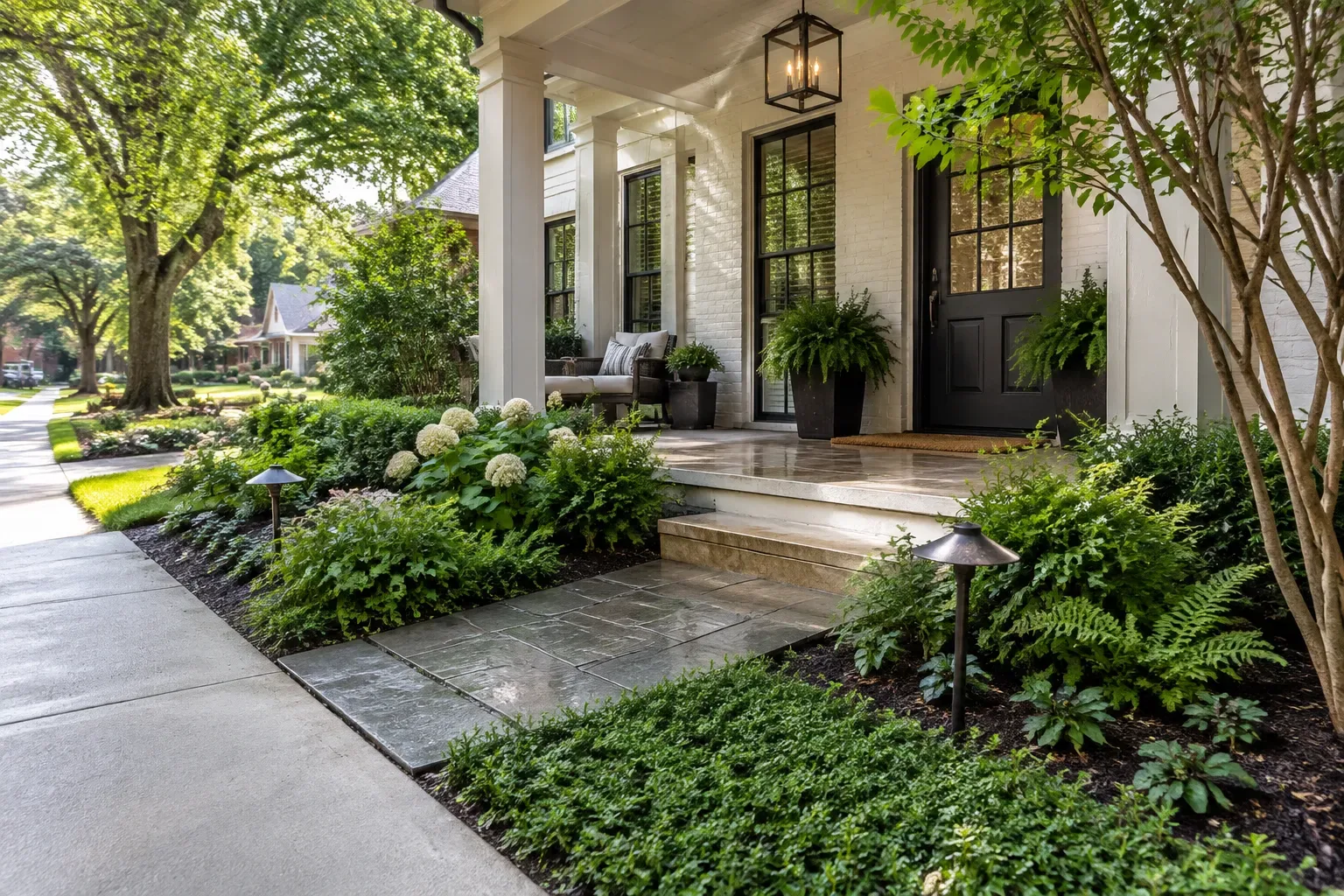
Can Landscape Design Make Front Porches More Usable Near Heights Blvd in Houston Heights?
Yes. Landscape design can make a front porch more comfortable and practical by improving the route to the door, managing water near steps and paving, adding well-placed shade, and creating privacy without closing off the entry. Near Heights Blvd, the best plans work with the actual porch, front walk, sidewalk, driveway, mature trees, and available planting space instead of treating the yard as decoration alone.
The right solution is not always a larger bed or more plants. A usable porch needs clear circulation, controlled runoff, comfortable conditions at the times people use it, and a layout that remains manageable as plants mature. Houston Heights Landscaping can help evaluate how those pieces fit together on a residential property.
Quick Answer
A front-porch landscape redesign is worthwhile when it solves a specific use problem: harsh afternoon sun, puddling by steps, a narrow or slippery route, little privacy, or planting that crowds the entrance. Start by identifying how people move from the sidewalk or driveway to the door, then plan shade, drainage, hardscape, planting, and irrigation around that route.
For lots near Heights Blvd, a design should be sized to the site. Older urban properties can have close-set features, existing paving, mature roots, and limited room for grade changes, so copying a broad suburban front-yard plan can make the entry less usable rather than more so.
What makes a porch usable instead of merely attractive?
A visually appealing front yard can still leave the porch hot, wet, hard to reach, or exposed. Usability comes from resolving the moments that make someone avoid the space: stepping around a puddle, squeezing past overgrown shrubs with groceries, or sitting in direct sun with heat reflecting from nearby paving.
A porch-use plan usually focuses on four connected goals:
Clear access
A direct, legible route from sidewalk, driveway, or curbside parking reduces awkward turns and keeps the doorway visible. Path edges, steps, and planting should not create pinch points as vegetation grows.
Shade and comfort
Tree canopy, layered planting, or an appropriate shade feature can reduce direct exposure. The useful question is when the porch gets sun, not simply whether the yard has a tree.
Water control
Roof runoff, compacted soil, paving, and grades can all direct water toward a porch. The design should guide water away from steps and walking surfaces without sending it toward a neighbor or public walkway.
Privacy with visibility
Planting can soften views from the street while preserving sightlines to the front door, house numbers, and approach. Dense screening directly beside the entry can feel enclosed and complicate maintenance.
How should a Heights Blvd front yard be evaluated before design begins?
Measure how the space is used before choosing materials or plants. Near Heights Blvd, established trees, sidewalks, narrow planting strips, older paving, and porch stairs can all limit what can move or be excavated. Existing roots and drainage arrangements deserve the same attention as the desired look.
- Walk the usual arrival routes from the sidewalk, driveway, and street to the front door, including while carrying packages.
- Note where people pause, sit, turn, or step down, and identify obstructions, low branches, thorny plants, uneven transitions, or slick surfaces.
- Observe sun and shade at the times the porch is most likely to be used, rather than relying on a single midday observation.
- Map downspouts, roof runoff, low spots, puddles, existing drains, mature trees, irrigation heads, and hardscape edges.
- Decide which issue matters most: access, shade, drainage, privacy, maintenance, or a combination of them.
- Have the proposed layout reviewed on site before changing grades, installing paving, or working near roots and utilities.
The U.S. Access Board's accessibility guidance is a useful reference for thinking about usable approaches, changes in level, and circulation. It does not mean a private residential porch automatically has to meet a particular ADA requirement, but it reinforces why abrupt transitions and obstructed routes deserve attention.
Can shade landscaping make a hot porch more comfortable?
It often can, especially where direct sun and nearby paving make the porch unpleasant during Houston's hot, humid summers. But shade needs to be designed around timing. A canopy that shades the yard in the morning may do little for a porch used after work, while dense planting that blocks breezes can make a humid sitting area feel less comfortable.
Evaluate the porch orientation, sun path, existing canopy, and the shade cast by the house. Then consider mature tree size, root protection, clearance from the structure, and high-wind exposure. Tropical storms and other high-wind events are another reason to avoid treating a large tree or shrub as a purely decorative object. Placement should account for mature size and the possibility of damaged vegetation blocking access.
A planting palette also needs to tolerate occasional freezes, not just summer heat. The goal is a durable composition that still looks intentional after seasonal stress and routine pruning.
How can landscape design keep water away from porch steps?
Water near a porch is an observable problem, not a diagnosis. A resident may notice standing water at the bottom step, splashback on the slab, erosion beside a walk, or a persistently damp planting bed. Possible causes include a downspout discharging in the wrong place, compacted soil, poorly directed surface flow, a low hardscape edge, or a drainage issue beyond the landscape area.
A professional site review can determine which conditions are actually present. On Houston-area clay soils, slow drainage and wet-dry soil movement can affect bed preparation, paving performance, and how runoff moves around the entry. The fix may involve adjusting the route of roof water, shaping an appropriate planting area, revising a hardscape transition, or using another site-appropriate drainage measure. It is not automatically a drain installation.
The EPA's Soak Up the Rain guidance explains how rain gardens and related green-infrastructure practices can manage stormwater close to where it falls when they are properly designed for the site. Any grading plan should also confirm that runoff is not redirected toward neighboring property or the sidewalk.
For irrigation adjustments that support new beds without soaking paving or foundations, see sprinkler installation and repair options in Houston. Overspray and erosion can undermine an otherwise sound front-entry layout.
Should you add pavers or change the front walkway?
A path change can be one of the most effective improvements if the current route is indirect, narrow, unstable, or difficult after rain. It should not be added just to fill open lawn. The route needs to connect the real arrival points to the porch, coordinate with stairs and existing paving, and avoid creating difficult mowing or trimming edges.
Durable, slip-resistant walking surfaces and carefully resolved transitions are especially useful where paths meet steps, turf, or planting beds. Hardscaping services in Houston can be relevant when a porch-use plan calls for pavers or another defined surface rather than a planting-only update.
Avoid the common mistake of making beds wider at the expense of the primary walk. A handsome path that becomes a narrow corridor once shrubs mature is less functional than a simpler route with room to walk naturally.
How can planting improve privacy without hiding the entrance?
Selective screening works better than a solid wall of greenery. Use layered heights to soften street views, frame the porch, and leave a clear visual connection to the front door. Groundcovers and lower perennials can define bed edges, while carefully placed shrubs can screen a sitting zone without blocking arrival sightlines.
Keep plant choice tied to maintenance. Aggressively spreading plants, brittle branches, low-hanging limbs, and thorny material beside a walkway can turn a privacy plan into an access problem. Mature vegetation also needs room for pruning and future repairs around the house, porch, fence, or irrigation components.
For a broader front-yard plan that coordinates beds, pathways, lawns, and outdoor living areas, explore landscaping services in Houston. A site-specific design can balance screening with visibility rather than maximizing either one.
What should be included in a low-maintenance porch landscape plan?
Low maintenance does not mean maintenance-free. It means selecting plants, surfaces, and irrigation practices that fit the available time and access. A practical plan accounts for pruning, leaf cleanup, mulch renewal, weed control, irrigation checks, and space to reach windows, hose connections, and porch edges.
Choose plants according to mature form and site conditions, then leave enough room between vegetation and the structure for airflow and upkeep. Coordinate irrigation zones so water reaches planting areas without routinely spraying porch paving, fences, or foundations. The full landscaping service overview can help homeowners identify which parts of a larger outdoor plan may need coordination.
When is landscaping not the right answer for a porch problem?
Landscape changes cannot repair a failing porch, correct every drainage defect, or resolve electrical and structural concerns. If steps are loose, a slab is visibly damaged, handrails are unsafe, water is entering the house, or a tree presents a clear hazard, those conditions may require a qualified structural, electrical, tree, or drainage professional outside the scope of landscape installation.
Landscaping is most effective once the underlying condition has been identified. It can then improve the setting around a sound porch by managing surface water, creating a clearer route, reducing heat exposure, and making the entry easier to maintain.
The practical takeaway is simple: design the front yard around the trip to the porch and the time spent on it, not around a planting photo. A clear route, controlled water, appropriately timed shade, and plants sized for maturity will do more for daily use than extra ornament alone.
Ready to discuss your project?
Request a front-porch landscape consultation to evaluate shade, access, and runoff around your Heights Blvd-area home.
FAQ
Can landscaping really make a small front porch feel more usable?
Yes, because the usable area includes the approach and the space immediately around the seating or entry zone. A smaller porch can feel more functional when the walk is unobstructed, nearby planting does not crowd the railings, and screening is positioned to soften views without enclosing the doorway. The goal is not to make the yard look larger. It is to remove the friction that makes the porch inconvenient to reach or occupy.
What should I fix first, the walkway or the plants?
Start with circulation and drainage. A beautiful planting plan cannot compensate for a route that puddles, narrows at the steps, or forces people through branches. Once the real path of travel is established, bed edges and plant locations can support it. If the route needs a more durable surface or a corrected transition, Houston hardscaping options are a logical next area to explore.
What plants work best near a Houston Heights porch?
The best choice depends on sun exposure, soil drainage, mature size, wind exposure, and the clearance needed around steps and walks. Rather than selecting a plant solely for its appearance at purchase, ask how wide and tall it becomes, how often it needs pruning, and whether it tolerates periodic freezes. A site review is more reliable than a generic plant list because porch orientation and existing tree cover can vary significantly.
How do I stop water from collecting by my front steps?
First, trace where the water comes from after rain. Check downspout outlets, hardscape edges, low spots, and whether water moves from the driveway or walk toward the steps. Standing water does not prove one cause. A landscape assessment can identify surface-flow issues, while plumbing, structural, or public-drainage conditions may need separate evaluation. Avoid adding soil against the structure as a quick fix without confirming how it affects drainage.
Can I add privacy plants without making my front door hard to see?
Yes. Use lower planting close to the approach and place taller screening where it blocks the most intrusive view without covering the doorway, address, or key sightlines. Layered beds are generally easier to manage than a continuous tall hedge. Keep enough open space for pruning and ensure the design does not create a concealed pocket beside the entrance.
Do I need an irrigation update when I redesign front beds?
Not always, but it is worth checking. New plant groupings may need different water delivery than lawn, and existing heads may spray paving, porch surfaces, or the house once bed lines change. Sprinkler planning and repair services can help align irrigation coverage with the revised layout. Proper zoning also helps avoid persistent dampness and runoff from overwatering.
Should I remove a mature tree to get more porch shade or sunlight?
Not automatically. A mature tree can be valuable for shade, but its canopy timing, roots, condition, and clearance from the porch all matter. Removal or major tree work should follow an appropriate tree assessment, especially where roots affect paving or excavation is planned nearby. Sometimes selective pruning, a revised seating location, or planting adjustments provides a better result than removing an established tree.
What should I ask during a front-porch landscape consultation?
Ask how the plan handles the route from sidewalk and driveway to the door, roof runoff, existing tree roots, mature plant size, irrigation coverage, and future maintenance access. Also ask what work falls outside landscape scope, such as structural repairs, electrical changes, significant tree hazards, or permit verification. A useful consultation should connect each recommendation to a practical porch-use goal, not just a visual style.