Can a Landscaper Plan Shade-Tolerant Lawns Near W 19th St in Houston Heights?
Yes. A landscaper can evaluate a shaded yard near W 19th St and create a lawn plan based on the actual light, tree canopy, soil, drainage, irrigation coverage, and intended use of each area. The right answer may include shade-tolerant turf in brighter sections, but dense shade often calls for mulch, planting beds, groundcover, or hardscape instead of forcing grass to survive.
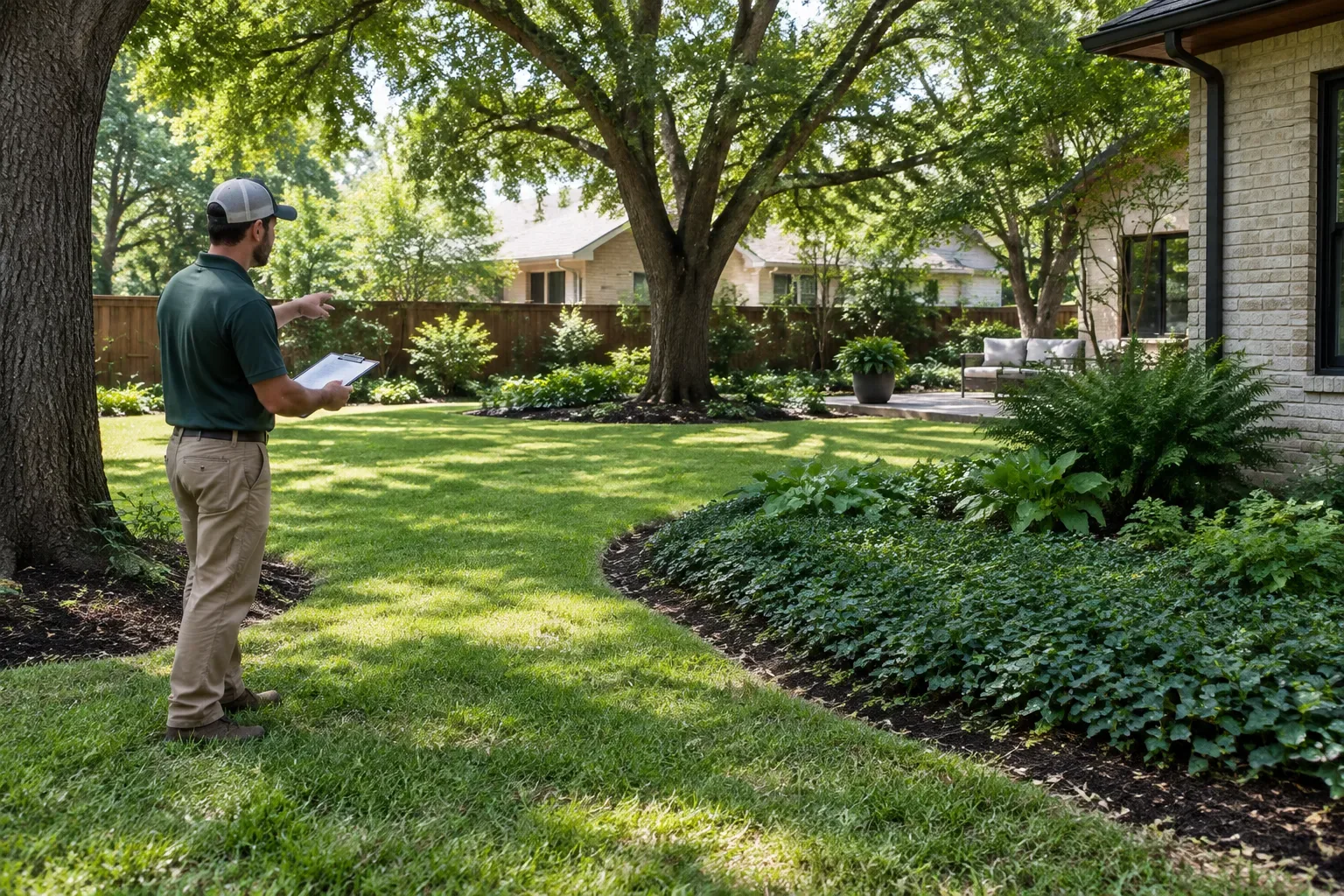
The street name alone does not reveal how much sunlight a particular property receives. A useful plan starts with an on-site assessment, especially where mature trees, nearby buildings, fences, patios, and narrow side yards create different light conditions within the same landscape.
Quick Answer
A shade-tolerant lawn is possible where a site receives enough usable light and has manageable root competition, soil conditions, and moisture levels. It is not a promise that grass will thrive everywhere under a canopy or beside a structure.
A practical landscape plan separates the yard into zones rather than treating it as one lawn. Houston Heights Landscaping can help homeowners evaluate those zones and plan landscaping around the conditions that are actually present.
What should a landscaper inspect before recommending grass?
Light is only the first variable. A professional assessment should look at how the site functions throughout the day and after rain, because a low-light lawn can fail even when the selected turf is generally considered more shade tolerant.
- Map direct and filtered light in the proposed lawn area at several points during the day. Note whether shade comes from tree cover, a building, fencing, or a combination.
- Check the ground for exposed roots, compaction, bare spots, standing water, slope, and signs that runoff collects in the area.
- Review existing sprinkler coverage. Tree canopies can block water from reaching the ground, while shaded soil can also remain wet longer than open turf.
- Discuss how the space will be used, including foot traffic, pets, play areas, and whether a lower-density lawn would be acceptable.
- Match each zone with turf, a planting treatment, mulch, pavers, or another surface that fits its light and maintenance limits.
In warm, humid Houston conditions, lack of light can combine with moisture retention and disease pressure to weaken warm-season turf. Heavy rain can make the problem worse if compacted soil or poor drainage keeps a shaded section wet long after a storm. That is why grass choice alone is not a complete plan.
Texas A&M AgriLife's Texas turfgrass guidance explains that turfgrass options have differing growing characteristics and site requirements. A site visit is still necessary to determine whether a particular area has enough light for dependable turf.
How is filtered tree shade different from deep building shade?
Filtered shade occurs when sunlight passes through a tree canopy and reaches the ground in shifting patches. It can support turf in some locations, although tree roots may compete with grass for water and nutrients. Deep structural shade, such as a consistently dark strip beside a house, fence, or neighboring structure, usually leaves fewer practical turf options.
A lawn can also receive morning sun but little afternoon light, or the reverse. Those patterns matter because the lawn's growing conditions are not the same across the property. Mature trees and dense residential lots can create a bright front area, a moderately shaded backyard, and a deeply shaded side yard just a few steps apart.
When should a shaded area use turf, mulch, planting beds, or hardscape?
The best surface depends on usable light, roots, drainage, and how the area needs to function. Replacing struggling grass is not settling for less. It is often the more durable design choice.
Shade-tolerant turf
Best for areas with meaningful filtered light and moderate use. It needs appropriate mowing, irrigation adjustments, and realistic expectations about density compared with full-sun grass.
Mulch
Useful beneath trees or in low-traffic areas where exposed roots and dense canopy make grass difficult to establish. It can also help define planting zones without competing with turf.
Planting beds or groundcover
A good fit for ornamental areas where grass has repeatedly thinned. Plant selection should still account for available light, root competition, drainage, and maintenance preferences.
Pavers or other hardscape
Practical for a path, seating area, or consistently used route where foot traffic would wear down shaded turf. Surface drainage and the transition to surrounding planting areas should be planned carefully.
For an area intended for outdoor seating or circulation, hardscaping services in Houston may offer a more reliable alternative to a lawn that repeatedly becomes thin or muddy.
How do tree roots and compacted soil affect a shaded lawn?
Thin grass is an observable symptom, not a diagnosis. Possible causes include insufficient light, tree-root competition, compacted soil, poor irrigation coverage, excess moisture, traffic, or a combination of these. An inspection can identify whether roots are near the surface, whether soil is compacted, whether water is pooling, and whether the canopy is limiting light beyond what turf can tolerate.
Compaction restricts rooting and infiltration. In a shaded zone, that can mean weaker turf and slower recovery from wear. Tree roots also compete for available water and nutrients, so aggressive soil disturbance near established trees is not automatically the answer. A root-aware plan may favor mulched beds or a different landscape treatment rather than trying to create a full, high-traffic lawn under a dense canopy.
What irrigation changes does a shaded lawn need?
Shaded turf should not simply receive the same watering schedule as open lawn. Soil under trees may stay damp longer, while branches can intercept sprinkler spray and leave some spots drier than expected. Both conditions can occur in the same yard.
A sprinkler audit should confirm head placement, overlap, runoff, and where water actually lands. If coverage is uneven or a schedule needs adjustment after drainage and light are assessed, sprinkler installation and repair in Houston can be part of the larger lawn plan. Irrigation changes should follow site conditions, not a fixed assumption that shaded grass needs more water.
Can pruning make enough light for grass?
Selective thinning or raising lower branches can sometimes increase filtered light and air movement, but it does not automatically turn deep shade into a turf-ready area. The appropriate extent of pruning depends on the tree, its condition, and the landscape goal. Tree-related health or safety concerns may require a qualified tree professional and can be outside a general lawn-planning scope.
The common mistake is removing or cutting back more canopy than necessary just to preserve grass. Before altering a mature tree, compare the likely lawn benefit with a design that works with the existing shade, such as mulch, planting beds, or a path.
What maintenance does grass in shade usually require?
A shaded lawn often needs more observation and gentler maintenance than a sunny one. Avoid mowing it excessively short, because shorter leaf blades reduce the plant's ability to capture limited light. Limit repeated foot traffic in weak areas, monitor moisture rather than watering by habit, and address leaves or debris that further block light.
Landscape maintenance can also include watching for changing shade as trees grow or surrounding plantings fill in. For broader planning that connects lawn areas, beds, mulch, pathways, and outdoor-use zones, explore landscaping services in Houston.
How can a homeowner prepare for a shaded-lawn consultation?
Bring a simple record of what you see rather than trying to diagnose the lawn yourself. Photos taken in the morning, midday, and afternoon can show how shade moves. Note where water stands after rain, where grass repeatedly thins, where people walk, and which areas must remain lawn versus areas that could become beds or a path.
It also helps to identify the goal. Some households want a soft play surface, while others need a tidy low-maintenance setting beneath trees. Houston landscaping services can address multiple outdoor elements, which makes it easier to plan the lawn as one part of the property rather than an isolated patch of grass.
What is the practical next step for a lawn near W 19th St?
Start with the light and drainage pattern, then select the surface that can realistically perform in each zone. A healthy-looking design does not require grass in every square foot. It requires using turf where it has a fair chance to establish and choosing a better treatment where it does not.
For a property-specific assessment near W 19th St, request a consultation from Houston Heights Landscaping to discuss sunlight, tree cover, irrigation, drainage, and the desired use of the space.
Ready to discuss your project?
Discuss the light, tree cover, and drainage pattern of your lawn near W 19th St with Houston Heights Landscaping.
FAQ
What grass grows best in shade in Houston?
There is no single grass that is best for every shaded Houston yard. The useful question is how much direct or filtered light reaches the specific area, along with how roots, moisture, and foot traffic affect it. Texas warm-season turf choices differ in their site requirements, so a landscaper should assess the lawn zone before recommending installation rather than selecting grass by name alone.
Is St. Augustine grass good for shade in Houston Heights?
St. Augustine is often discussed for shaded lawns, but that does not mean it will succeed in deep shade or beneath dense tree roots. Performance depends on available light, drainage, mowing practices, irrigation, and traffic. If a site lacks enough usable light, a mulched bed, planting area, or path can be a more dependable choice than repeatedly replacing thin turf.
How much sun does a shaded lawn need?
The exact light requirement depends on the turf selection, so measure the site instead of relying on a general rule. Record direct and filtered light at multiple points during the day, and repeat the observation in another season if possible. A landscaper can use that pattern to distinguish a potentially turf-ready area from one that is consistently too dark.
Why is grass dying under my trees?
Grass thinning under trees can be caused by limited light, root competition, compacted soil, moisture imbalance, traffic, or several factors together. The symptom alone does not prove one cause. An inspection can determine whether the area is receiving too little light, staying wet after rain, or losing water to root competition, then guide the appropriate landscape planning approach.
Should I use mulch under trees instead of grass?
Mulch is often a sensible choice where surface roots, dense canopy, or persistent low light make turf unreliable. It can reduce the visual problem of bare soil while creating a defined planting zone. It is not ideal for every use, however. If the area functions as a walkway or sitting area, a more durable surface may be worth considering instead.
Can sprinklers cause problems in shaded grass?
Yes. Sprinklers can contribute to problems if shaded soil remains wet too long, or they can leave dry patches when tree foliage blocks the spray. The answer is not always less water or more water. A coverage review should check where irrigation lands, how long the ground stays damp, and whether drainage changes are needed. See sprinkler services in Houston for help evaluating the irrigation side of the plan.
Will trimming tree branches fix a patchy lawn?
It may improve filtered light in some cases, but it is not a universal lawn fix. Dense structural shade, significant root competition, compacted soil, or heavy use can still prevent good turf performance after pruning. Any tree work should be considered carefully, with the lawn benefit weighed against the value and condition of the tree.
Can a landscaper help if part of my yard is sunny and part is shaded?
Yes. Different conditions across one property are a reason to use a zone-based design. A plan may keep turf in brighter areas, use beds or mulch where shade is heavier, and add a path or patio treatment where traffic is concentrated. This approach avoids spending on a uniform lawn installation that does not match the site's changing light conditions.