How Should Landscape Design Handle Mature Trees Near W 11th St in Shady Acres?
Landscape design near mature trees should begin by treating the tree, its visible roots, canopy, drainage paths, and trunk base as design constraints, not obstacles to remove. The safest approach is usually a low-disturbance plan: retain the existing grade near the trunk, limit excavation and equipment traffic, use planting pockets and mulch instead of raised beds, and route paving, irrigation, and drainage around significant roots where feasible.
For properties near W 11th St in Shady Acres, a good plan also separates landscaping decisions from tree-health decisions. Houston Heights Landscaping can help evaluate how planting areas, paths, lawns, and outdoor-use areas fit around established trees, while signs of a potentially unsafe or declining tree call for a qualified arborist's assessment before construction begins.
Quick Answer
Protect the trunk flare and root zone first, then build the landscape around them. Keep soil and mulch away from the bark, avoid unnecessary grade changes and trenching, choose plants for the actual shade and moisture beneath the canopy, and coordinate runoff management with the existing trees. A patio, path, or bed can still be possible, but its shape, material, and installation method should follow the tree's root layout rather than force a standard rectangular plan.
What should be assessed before designing around a mature tree?
A site inventory prevents an attractive plan from creating a long-term tree or drainage problem. Before selecting plants or locating pavers, document what is already present:
- Canopy spread, trunk flare, visible roots, low limbs, cavities, fungal growth, storm damage, or a noticeable lean
- Existing soil grade and where water travels during heavy rain
- Compacted areas, such as places where vehicles, materials, or equipment have been parked
- Utilities, downspouts, fences, existing patios, and access routes for installation equipment
- The intended use of the space, such as a planting bed, walkway, sitting area, lawn, or play area
This matters on established central Houston lots, where mature hardscape, utilities, narrow access, and existing trees can limit where equipment and new construction can go. A phased design is often more sensible than broad removal or regrading when root locations or drainage behavior are uncertain.
How can a planting bed work without harming the trunk or roots?
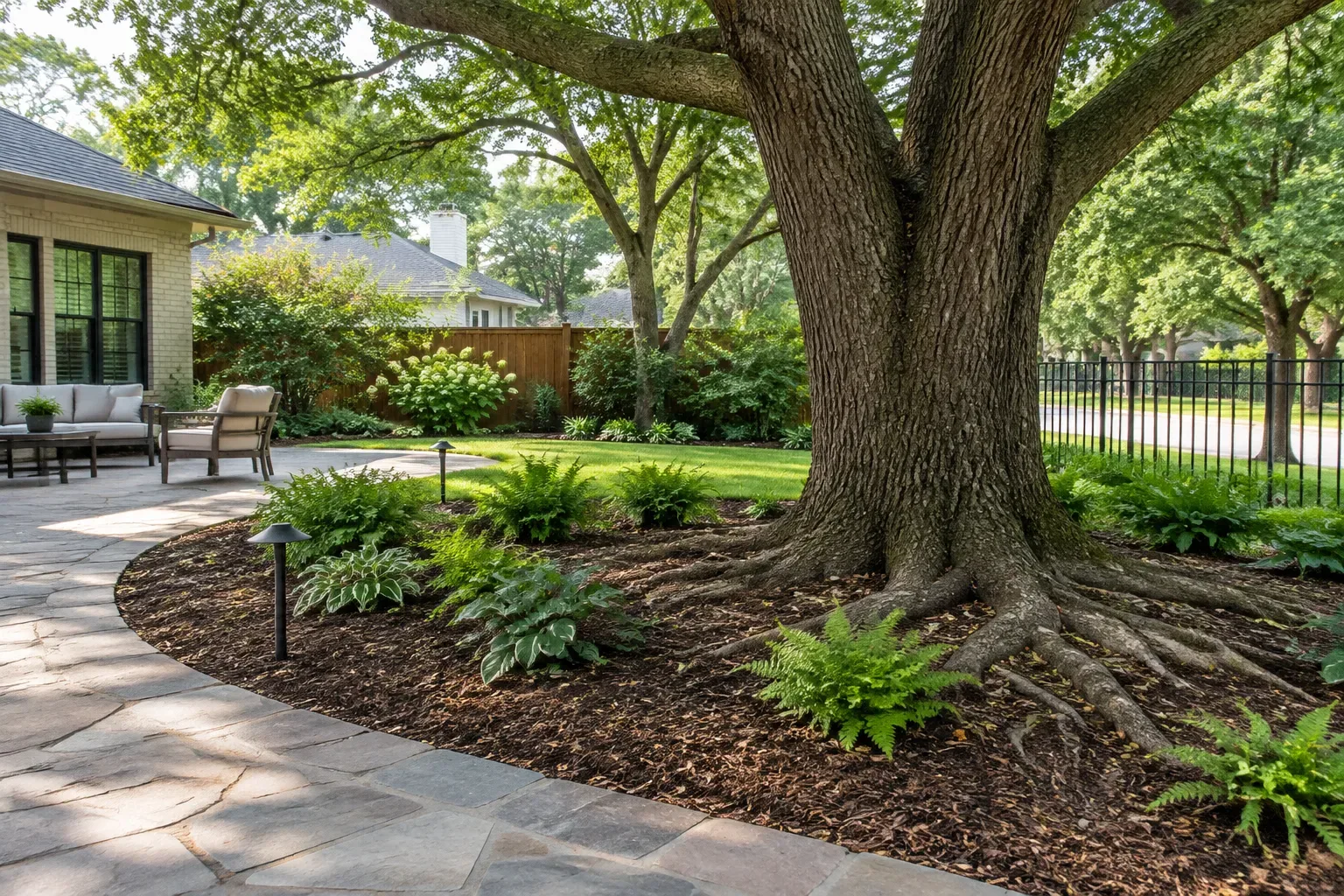
A planting bed should follow the tree's natural grade instead of burying its base. Keep the trunk flare visible, use a thin and even mulch layer across suitable areas, and leave open space between mulch and bark. Avoid the common "mulch volcano," where material is piled against the trunk.
Planting is typically less disruptive when it uses smaller, carefully located pockets instead of continuous deep excavation. Curving bed lines can work around surface roots, while shade-tolerant plants can fill open areas without requiring the removal of roots that are serving the tree.
Plant choice should reflect actual conditions, not just appearance. Beneath a mature canopy, plants need to handle reduced light, root competition, Houston heat, and humidity. Regional suitability and site conditions such as exposure and available water are central to thoughtful selection, as explained by Texas A&M AgriLife's Texas Tree Planting program.
Which low-impact surfaces work best beneath established trees?
The right surface depends on how the area will be used and how much root disturbance installation would require. These approaches can preserve more flexibility than a heavily excavated, continuous slab.
Mulch and shade-tolerant groundcover
Best for low-traffic areas where protecting roots and maintaining a natural look matter most. It can accommodate irregular surface roots and is relatively easy to adjust as the tree changes.
Stepping stones with planted gaps
Useful for a simple walking route without turning the whole area into a hard surface. Placement can be adjusted around roots, though each stone still needs careful site preparation.
Permeable pavers
A potential choice for defined paths or gathering areas when the installation can avoid major roots and minimize grade changes. Permeable surfaces can support stormwater management when properly designed and maintained.
Movable furnishings and containers
Appropriate when the goal is outdoor use rather than permanent construction. This option avoids a major excavation commitment and keeps future pruning or root-related work more accessible.
Vegetation, soil, and permeable features can be part of a broader stormwater strategy, according to the EPA's green infrastructure guidance. That does not mean every paver project is automatically tree-safe. Base preparation, grading, and drainage outlets still need to be planned around the existing root zone.
For a path, patio, or other constructed feature, review the available hardscape and outdoor-improvement work in the context of the specific tree and site constraints rather than assuming a standard layout will fit.
How should drainage be handled around mature trees?
Drainage and tree preservation need to be designed together. Houston's intense rain events can expose a weak plan quickly: compacted soil, a new impermeable surface, or poorly directed grading can concentrate water around roots or send runoff toward the house.
The objective is not to keep every drop of water away from a tree. Established trees need water, but chronic saturation, exposed roots, and abrupt changes in how water moves through the yard can create problems. Review downspout discharge, existing low points, patio runoff, and any proposed swales or drainage lines before installation.
Drainage work near roots should avoid creating unnecessary trenches through them. Where feasible, route lines around significant roots and use low-impact excavation methods in sensitive areas. If irrigation performance or water distribution needs review at the same time, sprinkler installation and repair services can be part of a coordinated plan.
What installation practices protect the root zone?
Root damage is not limited to cutting a large root. Repeated equipment traffic, stockpiled soil, stored pavers, and grade changes can compact or smother soil across a broader area. Compaction reduces pore space in the soil, making it harder for roots to exchange air and absorb water.
Follow a tree-sensitive sequence before building new beds, paths, or outdoor areas:
- Identify the trunk flare, visible roots, canopy extent, drainage routes, utilities, and proposed work areas.
- Mark areas where vehicles, spoil piles, pavers, and heavy equipment should not be placed.
- Finalize curved bed edges, planting pockets, and surface routes that avoid unnecessary excavation.
- Install drainage and irrigation with root-aware routing, using low-impact methods near significant roots where feasible.
- Add planting, mulch, and any hardscape only after confirming that finished grades will not bury the trunk base or direct runoff into the root zone.
- Monitor the tree and surrounding plants through the following growing season, especially after storms or major irrigation changes.
A landscape contractor can address planting layout, mulch, irrigation coordination, and construction access. Tree structure and health are separate questions. Large dead limbs, cavities, fungal growth, significant lean, soil heaving, or storm damage warrant evaluation by a qualified tree-care professional. The International Society of Arboriculture's public tree-care guidance is a useful reference for why pruning and root-zone protection should be guided by arboricultural practice, not appearance alone.
When should a design use less hardscape, not more?
More permanent construction is not always the better answer. If surface roots are widespread, the canopy creates deep shade, drainage is unresolved, or access would require equipment to cross the root zone, a lower-impact design may be the more durable choice. Mulch, planting pockets, a light-footprint path, and movable seating can create a finished outdoor area without demanding extensive excavation.
The common mistake is forcing a level, rectangular patio or raised bed into a space that cannot support it without root cutting or major grading. The realistic alternative is to reshape the use area around the tree, locate a larger patio outside the sensitive zone, or delay permanent work until drainage and root constraints are confirmed.
For broader planning of beds, lawns, pathways, front yards, back yards, and outdoor living areas, explore landscaping services in Houston. Houston Heights Landscaping provides residential landscape and outdoor-improvement services, including landscape design and installation, mulch, pavers, irrigation work, drainage, and tree trimming.
What maintenance keeps the design workable after installation?
A mature-tree landscape is not static. Canopies thicken, roots become more apparent, leaf litter accumulates, and understory plants may respond differently as shade and moisture change through the year.
Plan for periodic mulch renewal without piling material against the trunk. Check irrigation coverage separately for shaded beds and exposed lawn because their watering needs may differ. After major storms, look for hanging limbs, new lean, soil lifting, or changes in drainage patterns. Those are observable symptoms, not proof of a single problem. A professional inspection is needed to determine whether the cause is tree-related, drainage-related, or outside the scope of landscaping work.
The most practical takeaway is simple: preserve the tree's existing ground level and root space first, then let the bed lines, circulation route, irrigation layout, and outdoor features adapt to the site. For a tree-conscious site review near W 11th St, request a consultation with Houston Heights Landscaping.
Ready to discuss your project?
Request a tree-conscious landscape consultation for a property near W 11th St in Shady Acres.
FAQ
Can I put a flower bed around an old tree in Shady Acres?
Yes, but the bed should not become a raised mound around the trunk. Keep the trunk flare exposed, preserve the existing grade, and use carefully placed planting pockets rather than extensive digging across visible roots. The best layout depends on the canopy, root pattern, light levels, and intended plant size. If the tree has defects or signs of decline, seek arborist input before installation.
How close can pavers be to a mature tree?
There is no universal safe distance because root systems, tree condition, paving depth, and the proposed construction method vary. The useful question is whether the paver base and excavation can be installed without cutting significant roots, compacting the soil, or changing drainage near the trunk. A site-specific layout is safer than applying a generic clearance number. Explore Houston landscaping services for help coordinating a landscape plan with the proposed use of the space.
Should I remove surface roots to make mowing easier?
Usually, surface roots should be treated as a design constraint rather than removed automatically. Cutting roots can affect tree stability and health, while covering them deeply with soil can create a different problem. Consider mulch, shade-tolerant groundcover, or a revised bed edge instead. An arborist should assess roots that create a safety concern or interfere with a necessary structure.
What plants grow under mature trees in Houston?
Choose plants based on measured light, competition from roots, irrigation access, mature plant size, and tolerance for heat and humidity. A plant that looks good in a sunny nursery display may struggle under dense canopy cover. Start with a small test area if conditions are variable, and avoid relying on frequent heavy watering to keep a poorly matched plant alive.
Can sprinklers be installed around tree roots?
Often, yes, but routing and installation method matter. Trenches should avoid significant roots where feasible, and sprinkler zones should account for the difference between shaded beds and sunny turf. Irrigation should not create chronic wetness at the trunk base. A review of sprinkler installation and repair in Houston can help connect water delivery to the tree-aware landscape plan.
Why is water pooling near my mature tree after rain?
Pooling can result from compacted soil, changed grading, roof runoff, hardscape edges, blocked drainage paths, or a combination of factors. The symptom does not establish that roots are the cause. Observe where water enters and exits the area, whether pooling is new, and whether soil or paving has changed recently. Drainage may need correction even if the tree remains healthy.
Do I need an arborist before changing my yard around a large tree?
An arborist assessment is especially appropriate before construction if you see large dead limbs, cavities, fungal growth, substantial lean, storm damage, soil heaving, or other signs of possible structural risk. Landscaping professionals can plan around existing conditions, but they should not be expected to diagnose tree stability without the appropriate tree-care assessment.
Can a new fence or pergola be built near mature trees?
It may be possible, but post locations, footing depth, access routes, and overhead limb clearance all need review. The concern is not just the finished structure. Digging for posts and driving equipment can harm roots or compact soil before the structure is complete. If wind-exposed limbs or tree stability are a concern, have those issues evaluated before locating a permanent outdoor feature.