Is Residential Landscaping Worth Planning for Small Lots Near W 11th St?
Yes. Residential landscaping can be especially worthwhile on a small lot near W 11th St when the plan solves a specific problem: a soggy path, an unusable patch of yard, limited privacy, difficult access, or a lack of comfortable outdoor space. A thoughtful design does not need to make a compact property look larger than it is. It should make the available space work harder, with drainage, circulation, shade, planting, and maintenance considered together.
The strongest small-lot plans usually prioritize one or two uses instead of squeezing in every possible feature. Houston Heights Landscaping can help residents evaluate how lawn, beds, pavers, screening, and irrigation may fit the actual conditions of a residential yard.
Quick Answer
Small-lot landscaping is worth planning when it improves how the property functions day to day, not simply how it looks from the street. Start by identifying the highest-value outcome: dry access after rain, a place to sit, safer movement around the house, pet space, a more welcoming entry, or privacy from nearby homes.
It is less worthwhile to install features without first checking drainage paths, mature tree roots, sun exposure, gate access, and future plant size. On a constrained site, one misplaced patio edge, dense bed, or oversized shrub can create a maintenance or runoff problem that is expensive to correct later.
What makes a small-lot landscape plan worth the effort?
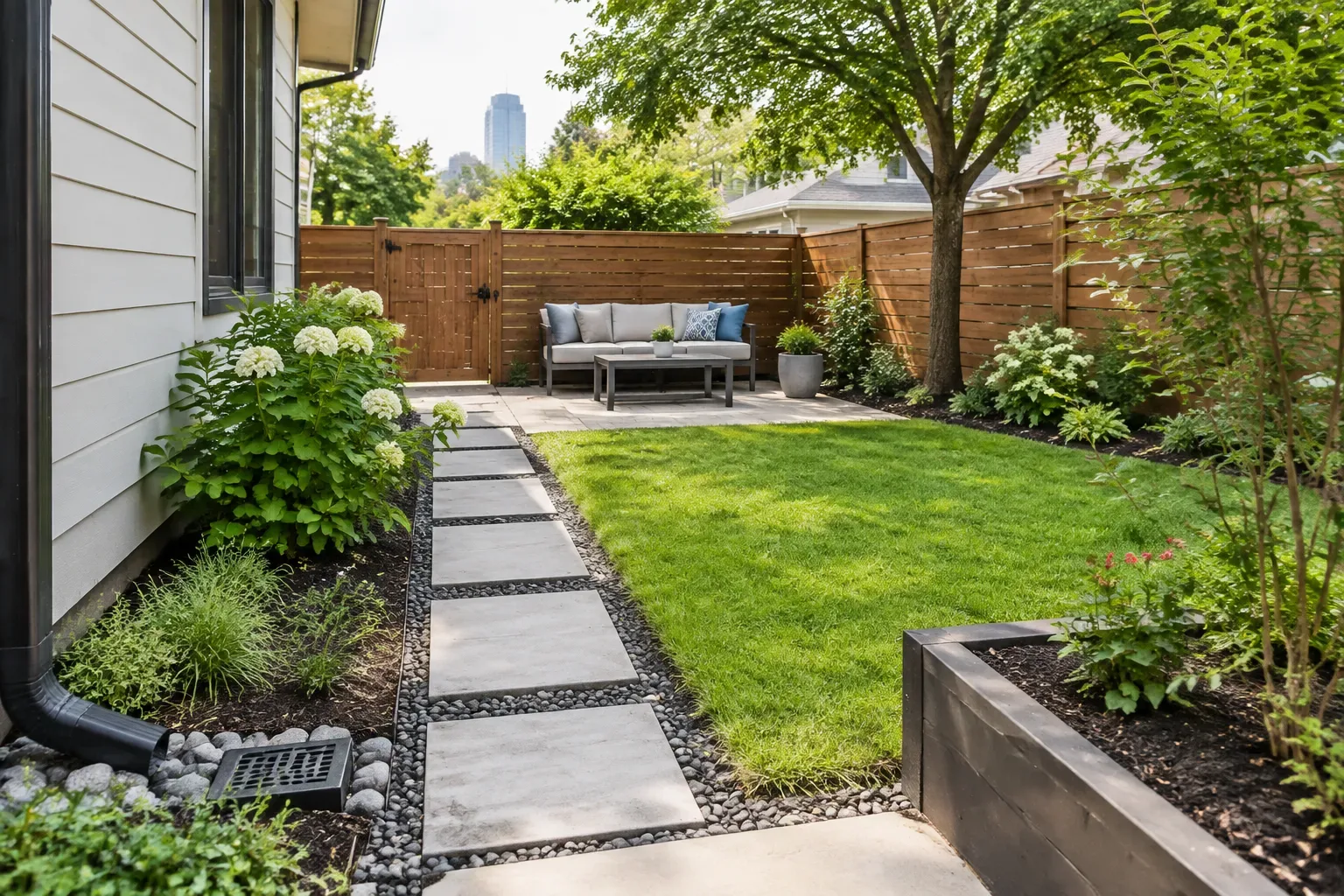
A small yard has little room for wasted space. The best return often comes from organizing the site into simple functional zones: an entry route, a usable gathering or play area, planting, service access, and a path for runoff. This approach is more useful than treating the whole yard as a single lawn or a collection of unrelated beds.
Planning matters most when the existing layout creates friction. Examples include a gate that is difficult to reach, a muddy area beside the home, a narrow side yard with no clear purpose, or a front yard that needs curb appeal without blocking visibility. Residential landscaping services in Houston can be a logical next step once those priorities are clear.
Which features deliver the most value in a compact yard?
The right feature depends on the purpose of the space. Comparing options by their footprint and upkeep helps avoid selecting a material or feature solely because it looks good in a photo.
| Option | Best use on a small lot | Ongoing upkeep | Drainage and planning considerations |
|---|---|---|---|
| Natural grass | Open space for light recreation or a traditional lawn appearance | Mowing, watering, edging, and seasonal care | Needs suitable light, soil preparation, and a watering plan that does not worsen wet areas |
| Artificial turf | Small, consistently usable pet or activity zone | Cleaning, debris removal, and occasional infill or seam attention | Base preparation and drainage are critical; exposed areas can retain heat |
| Planting beds with mulch | Narrow borders, entries, screening, and visual structure | Weeding, pruning, mulch renewal, and plant replacement as needed | Plant mature size and soil moisture needs must fit the location |
| Pavers or defined hardscape | Seating, walkways, and stable routes through the yard | Sweeping, joint care, and occasional cleaning | Slope, base preparation, runoff path, and drainage outfall need review |
A paver landing or narrow path may create more daily value than a larger lawn area if walking access is the main issue. For projects centered on a patio, walkway, or other durable surface, review hardscaping options for Houston properties alongside the planting plan.
How should drainage shape a landscape near W 11th St?
Runoff should have a planned route before new materials are installed. Houston rain events can overwhelm compacted or poorly graded ground, and a small lot gives water fewer places to spread. Downspout discharge, surface slope, planting-bed height, soil condition, and paved areas can all affect whether a yard stays usable after storms.
The City of Houston's flood-management information is a useful reminder that drainage deserves property-specific attention. Landscape-based approaches such as suitable permeable surfaces or rain-garden concepts may help in the right setting, but the EPA notes that these approaches must fit site conditions and be properly planned through its Soak Up the Rain guidance.
An observable symptom, such as standing water near a gate, does not prove a single cause. It may relate to compaction, low grading, a downspout location, an obstructed drainage route, or an issue beyond the landscape scope. A site inspection can identify conditions that need landscape changes and flag when another professional or authority should evaluate the issue.
How do sun, trees, and soil change the design?
A front yard, side passage, and backyard can have very different growing conditions on the same property. Intense summer sun can stress exposed turf and plants, while canopy shade and existing roots may limit digging and make some grass choices perform poorly. Dense established areas can also have compacted soil, which slows infiltration and makes plant establishment harder.
Choose plants based on mature size, light, moisture tolerance, root behavior, and the amount of pruning they will need, not their size at purchase. Mulch can help moderate soil moisture and reduce exposed soil, but it cannot correct a poor drainage route or compensate for a plant that is wrong for the location.
Irrigation should follow the zones, rather than forcing turf, shrubs, and shaded beds onto one watering schedule. The EPA's WaterSense landscaping guidance supports matching plant choices and irrigation practices to site conditions. If existing coverage is uneven or a small yard needs different watering zones, sprinkler installation and repair in Houston may be part of the larger plan.
What should you measure before requesting a landscape estimate?
Total lot size is only a starting point. Measure the spaces that can actually be used and note the obstacles that affect construction, care, and access.
- Mark the building edges, property lines if known, gates, fence lines, driveways, walks, and existing patios.
- Measure side-yard widths, the gate opening, major planting zones, and any area proposed for seating, turf, or pavers.
- Photograph the yard after rain and note where water collects, where downspouts discharge, and which routes remain muddy.
- Record sun and shade at several times of day, along with mature trees, visible roots, utilities, and areas where equipment must pass.
- Rank your top two priorities, then identify what can wait for a later phase.
A survey, utility information, and any known easements or restrictions are useful before finalizing a plan. Fence placement, drainage modifications, irrigation work, patios, pergolas, and outdoor features may be affected by property-line conditions, utility easements, deed restrictions, HOA requirements, or applicable local rules. Verify requirements for the specific parcel before construction.
Is a phased landscape project better for a small yard?
Often, yes. Phasing lets the work follow the site’s practical needs instead of forcing every desired feature into one installation. The usual logic is to address drainage and grading first, establish circulation or necessary hardscape next, then complete planting, screening, and optional outdoor features.
This sequence helps prevent a common mistake: installing attractive beds, turf, or a patio before confirming where water must travel and how crews will access the space. Browse the latest project page for a starting point on the types of outdoor improvements that can be considered, then narrow the scope to the property’s priorities.
When is a simple plan better than a full redesign?
A full redesign is not automatically the better choice. If the yard already drains well, access is clear, and the main need is a cleaner entry or a more manageable border, targeted bed work, mulch, pruning, or a small defined seating area may be enough.
A broader plan becomes more valuable when several decisions affect one another, such as drainage, fence screening, turf performance, irrigation coverage, and a future patio. Houston landscaping and outdoor improvement services can help frame those connected decisions without assuming every compact yard needs a major build-out.
What is the practical takeaway for a small lot?
Plan the space around its highest-value use and the water’s path through it. A compact yard can become more comfortable and easier to maintain when circulation, drainage, plants, and surfaces support the same goal instead of competing for the same few square feet.
For a site-specific conversation about priorities near W 11th St, request a consultation after gathering basic dimensions, photos after rain, and a short list of how you want to use the space.
Ready to discuss your project?
Bring your small-lot priorities and rain-day photos to a landscaping consultation for a property near W 11th St.
FAQ
Is landscaping worth it for a very small backyard?
Yes, if the plan gives the backyard a clear purpose. A small space can support a seating area, a pet zone, a path, compact planting, or a combination of two uses. It becomes less effective when too many features are packed into the same area. Start with the activity that would make the yard more useful most often, then protect access and drainage around it.
What is the best low-maintenance option for a small Houston yard?
There is no single best option because shade, drainage, pets, and use patterns matter. A restrained mix of appropriately sized plants, mulch, and a stable walking surface can be lower maintenance than a large lawn. Artificial turf may suit a defined activity area, but its drainage base, heat exposure, cleaning needs, and appearance should be evaluated before choosing it.
Can landscaping help with water pooling in a small yard?
It can help when the problem is related to grading, compacted soil, bed placement, downspout discharge, or an obstructed surface route. Pooling alone does not identify the cause, so avoid assuming that new plants or extra irrigation will fix it. A review of drainage patterns should come first. For connected design and drainage questions, Houston Heights Landscaping’s service options provide a useful starting point.
How do I make a narrow side yard useful?
First decide whether it needs to be a passage, a service route, a drainage corridor, or a visual feature. A narrow side yard often works best with a clear walking surface, simple low-profile planting, and enough room for gate access and maintenance. Avoid plants that will quickly overgrow the route or hardscape that blocks existing drainage patterns.
Should I install a sprinkler system for a small lot?
A small lot can still benefit from irrigation when turf, beds, and exposed areas have different watering needs. The key is zoning by plant and sunlight conditions rather than applying the same schedule everywhere. Irrigation is not a substitute for proper soil preparation or drainage. Learn more about sprinkler planning and repair if coverage or scheduling is part of your project.
Do I need permission for a fence, patio, pergola, or drainage work in Houston?
Requirements vary by the specific parcel and scope of work. Property lines, easements, deed restrictions, HOA rules, utility locations, and city or county requirements may affect what can be built or modified. Do not rely on a neighbor’s project as proof that the same approach is allowed on your property. Confirm applicable requirements before construction begins.
What should I bring to a landscaping consultation?
Bring rough dimensions or a survey if available, photos of the yard in dry and wet conditions, a list of priority uses, and any information about utilities, easements, restrictions, or recurring maintenance frustrations. It also helps to identify where sun falls during the day and which plants or surfaces you prefer. These details make it easier to discuss a practical scope rather than a generic idea.