What Can Landscaping Solve in Independence Heights Yards Near W 43rd St?
Landscaping can solve many practical yard problems near W 43rd St., including standing water, muddy walking routes, thin grass, inefficient sprinkler coverage, overgrown planting areas, limited privacy, and outdoor spaces that are difficult to use. The right fix begins with the actual symptom and the way water, sunlight, foot traffic, roof runoff, and existing features interact on that individual property.
For Independence Heights residents, a thoughtful plan may combine grading or drainage, turf or mulch, planting beds, irrigation repair, pavers, fencing, or routine maintenance. Houston Heights Landscaping provides residential landscaping and outdoor-improvement services in Houston, but a site-specific assessment matters because nearby lots can drain and function very differently.
Quick Answer
Landscaping is most useful when it matches a visible yard issue to an appropriate response:
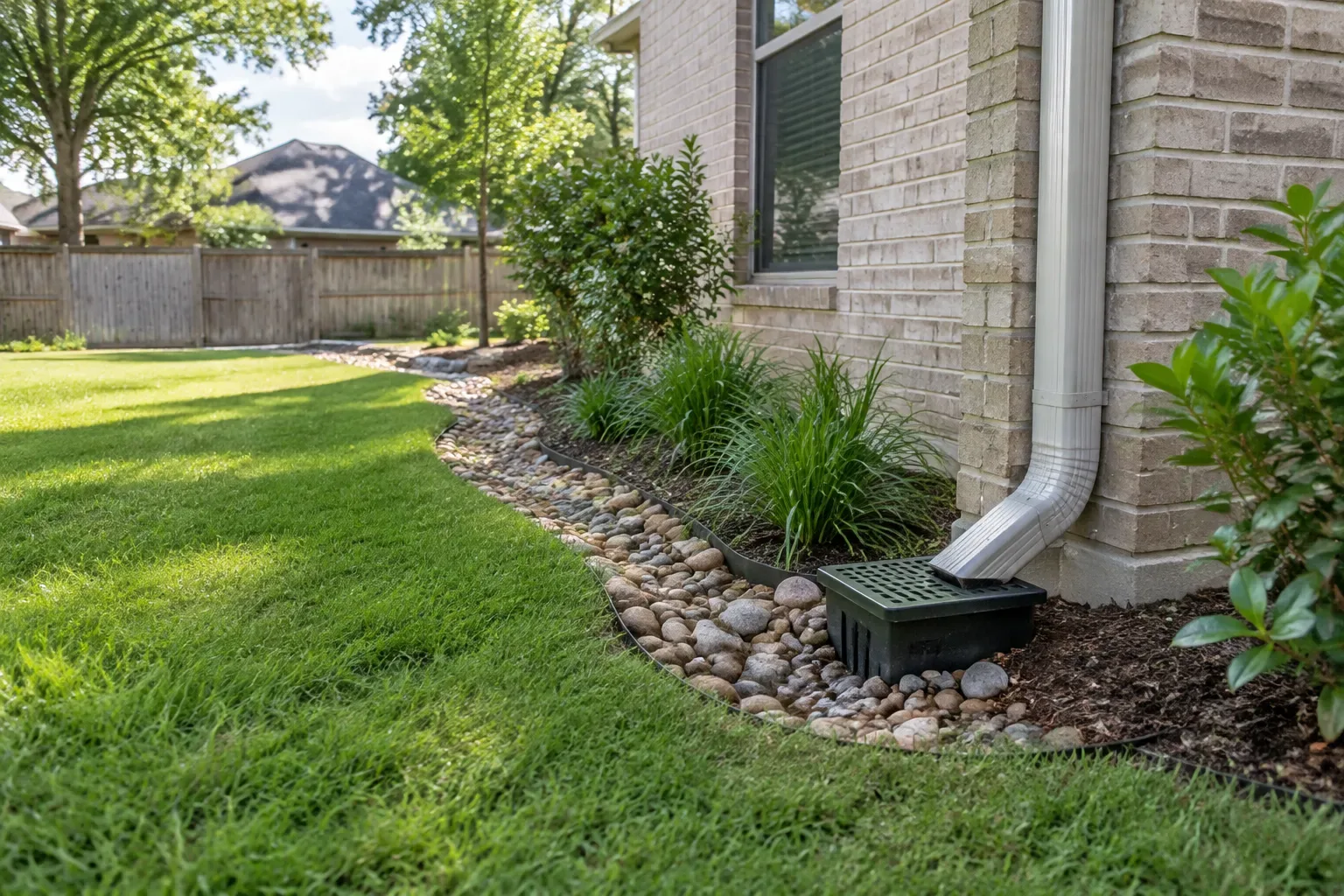
- Water that pools or moves toward the house may need drainage evaluation, surface grading, or better downspout routing.
- Bare, worn, or muddy areas may benefit from a lawn change, mulch, planting-bed redesign, or a defined paver path.
- Plants that struggle can point to unsuitable placement, irrigation coverage problems, shade, compacted soil, or maintenance needs.
- A cramped or exposed yard can become more usable with circulation routes, screening, beds, fencing, or outdoor-living features.
Landscaping is not a substitute for diagnosing every water issue. Street drainage, a roof leak, a plumbing leak, public infrastructure, or a broader flooding condition may fall outside the scope of a yard installation.
Can landscaping fix standing water and runoff?
It can often improve water movement on private property, but standing water is a symptom, not a diagnosis. Possible causes include a low area, compacted soil, roof discharge, a blocked or inadequate drainage route, irrigation overspray, or surrounding grades that direct water into the yard. Only an inspection can confirm which conditions are present.
Houston can receive intense, short-duration rainfall. That makes it especially important to distinguish roof runoff from water that moves across the lawn. Gutter discharge may need its own routing solution, while a low planting area or patio edge may need grading, a collection feature, or a drainage path designed around the lot. The City of Houston's drainage information also makes clear that drainage involves public infrastructure as well as private-property decisions.
The EPA's runoff-management guidance describes the broader principle of slowing, capturing, infiltrating, or controlling rain close to where it falls. On a residential lot, the practical method should be selected only after reviewing slopes, downspouts, utilities, trees, access, and the available discharge path.
What helps with bare grass, mud, and worn footpaths?
A lawn problem is not always a lawn-care problem. Repeated foot traffic, shade, wet soil, compacted ground, poor irrigation coverage, and pet activity can all create bare patches. Repeatedly reseeding or replacing sod without addressing the trigger can result in the same thin area returning.
For a route people use every day, a designed surface is often more practical than expecting turf to survive constant traffic. Pavers can create a stable passage between a gate, driveway, patio, or entry. Their performance depends on base preparation and slope, because surface water still needs a planned route.
Grass installation
A fit for areas with adequate sun, workable soil, and a realistic watering and maintenance plan. It is best when the goal is a living lawn rather than a high-traffic route.
Artificial turf
Useful where a consistent green surface is the priority and the property owner accepts a manufactured surface. Drainage preparation and edge details still matter.
Mulch and planting beds
A practical response for shade, awkward corners, or areas where turf repeatedly struggles. Mulch helps manage bare soil but does not correct a drainage problem beneath it.
Pavers or defined walkways
Best for recurring muddy travel lanes and connections between usable spaces. A properly prepared base and suitable slope are essential.
A broader Houston landscaping service can coordinate the overall layout so that beds, lawn areas, paths, and drainage do not work against one another.
Should you repair sprinklers before watering more?
Usually, yes. More runtime does not solve a broken head, a leak, poor coverage, incorrect nozzle choice, low pressure, or a controller schedule that runs at the wrong time. It can make low spots wetter while other parts of the yard remain dry.
Observable signs include spray hitting pavement, water bubbling from the ground, dry strips between heads, or plants that look stressed despite frequent watering. Those signs suggest possible irrigation issues, but an inspection is needed to identify the specific cause. Sprinkler installation and repair in Houston can address system condition alongside the landscape's watering needs.
The EPA recommends controllers and schedules that better match landscape needs rather than applying unnecessary water. Its WaterSense controller guidance is a useful reminder that watering should respond to conditions, not simply follow a fixed habit through every season.
How can design make a small yard more useful?
Usability often comes down to circulation and purpose. A yard can feel disorganized when the route from the house to a gate cuts across grass, the patio has no defined edge, or planting beds consume space without creating privacy, shade, or visual structure.
A landscape plan can assign each area a job: arrival, walking, sitting, planting, screening, play, or storage access. In compact urban settings, roots, utility locations, narrow access, and existing grades can limit what is feasible. That is why a larger hardscape or outdoor-living project should be planned around the site rather than selected from a standard layout.
Pavers, pergolas, fences, beds, tree trimming, and patio-oriented improvements are among the services listed on the company's landscaping services page. The best combination depends on how the household intends to use the space, not on adding the most features.
Can landscaping improve privacy without closing in the yard?
Yes, though privacy solutions have limits. A fence can establish a direct visual boundary, while layered planting can soften views and make an outdoor area feel more enclosed. Trees or shrubs may take time to fill in, and plant placement must allow room for mature growth and maintenance access.
Privacy planting does not guarantee sound reduction or complete screening from every angle. Property lines, utilities, drainage flow, and any applicable neighborhood or municipal requirements should be checked before work begins. In some cases, a modest screen near a seating area is more useful than trying to block every view along the whole lot.
What should you document before requesting a landscaping consultation?
Good information helps separate a cosmetic upgrade from a drainage, irrigation, or access problem. Take photos during dry weather and shortly after rain, then note which areas are difficult to mow, walk through, or use.
- Mark where water collects, where downspouts release water, and where runoff appears to leave the yard.
- Note thin grass, muddy routes, exposed roots, dying plants, and pavement or fence areas affected by moisture.
- Record sprinkler run times and visible problems such as misting, overspray, leaks, or heads that do not pop up.
- Measure the spaces you want to change and identify gates, utility equipment, trees, and likely access routes.
- Decide on the outcome you want first, such as a drier side yard, a usable patio approach, lower-maintenance beds, or added privacy.
For design inspiration and examples of the type of work the company presents, review the latest project page. If you want a property-specific conversation, you can request a free estimate or consultation with observations and photos ready to discuss.
What is the most common mistake with yard improvements?
The common mistake is treating the visible surface before addressing the underlying condition. New plants, sod, mulch, or pavers may improve appearance, but they can fail prematurely if water continues to collect, traffic stays concentrated in the same place, or sprinklers keep overwatering one zone.
Start with the problem that affects everything else. If drainage is uncertain, evaluate water first. If an area is worn from daily travel, plan the route before installing new grass. If plant decline is the concern, review light, irrigation, soil condition, and root competition before replacing plants.
Ready to discuss your project?
For a yard near W 43rd St., request a consultation to discuss drainage, lawn, irrigation, or layout concerns on your property.
FAQ
Can landscaping stop water from pooling near my house?
It may reduce pooling caused by private-lot conditions such as downspout discharge, surface low spots, compacted soil, or a poor drainage route. It cannot be assumed to solve every water problem, especially one tied to plumbing, roof leaks, street drainage, or broader flood exposure. A site review should identify where water begins, how it moves, and whether a safe outlet or on-site approach is feasible.
Is a French drain always the right answer for a wet Houston yard?
No. A French-drain-type system can be appropriate in some situations, but it is not a universal answer. A wet area may instead need downspout rerouting, surface grading, irrigation repair, soil improvement, or a different landscape layout. Before choosing a system, have the drainage pattern reviewed alongside the yard's slope, existing features, roots, utilities, and destination for collected water.
Why is my grass dying in one part of the yard?
One failing area can result from shade, repeated foot traffic, inadequate or excessive irrigation, compacted soil, drainage issues, pests, or plant disease. The symptom alone does not prove which one is responsible. A practical next step is to observe sunlight, check sprinkler coverage, and look for persistent wetness or worn routes. A Houston landscaping assessment can help determine whether turf, beds, mulch, or a path is the better response.
Can pavers solve a muddy side yard?
They can solve the access problem when mud is caused by repeated travel between a gate, driveway, or backyard. They do not automatically fix the water source. A durable paver route needs a properly prepared base and a slope that does not direct water toward the house or create a new low area. If the side yard remains wet without foot traffic, drainage should be evaluated first.
Should I add more sprinkler time during hot weather?
Not until coverage and system condition are checked. Hot, humid conditions can stress turf and plants, but extra watering can keep soil too wet, worsen runoff, and contribute to plant problems. Look for leaks, broken heads, overspray, dry zones, and controller settings first. The sprinkler repair and installation page is a useful next step for system-focused help.
Can shrubs and fencing create privacy in a small yard?
Yes. Fencing provides immediate visual separation, while shrubs and layered beds can soften the boundary and shape views around a patio or seating area. The right approach depends on desired screening height, available planting width, maintenance expectations, property lines, and access needs. A mixed approach often preserves more openness than trying to create a tall, continuous screen everywhere.
Do I need a complete landscape replacement to improve curb appeal?
No. Targeted work can make a substantial difference when the layout is still functional. Bed cleanup, mulch, selective tree trimming, refreshed planting, lawn repair, and clearer edging can improve the front yard without rebuilding every area. A full redesign is more appropriate when circulation, drainage, planting space, or the intended use of the property has changed.