What Landscaping Works Around Mature Trees Near Ella Blvd in Garden Oaks?
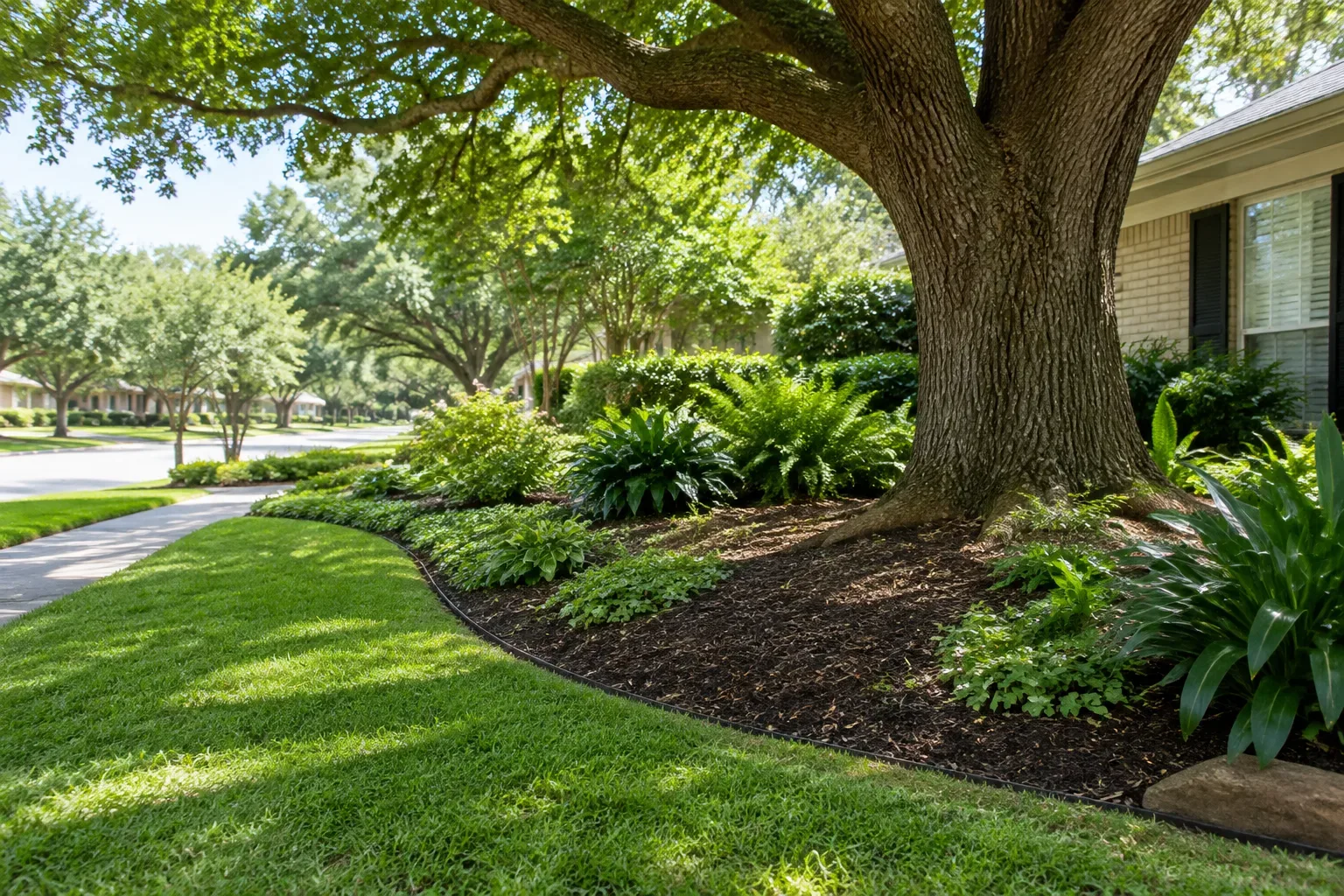
The best landscaping around mature trees near Ella Blvd in Garden Oaks usually combines a shallow mulch area, shade-tolerant planting pockets, and lawn or paving only where light, drainage, and roots allow it. Mature canopies reduce light, while established roots compete with new plants for water and nutrients, so a full turf lawn or deeply excavated flower bed often performs poorly beneath them.
A tree-friendly plan protects the trunk flare, avoids broad digging through roots, and matches plants to the actual moisture and shade conditions on that property. Houston Heights Landscaping can help homeowners evaluate planting areas, lawn transitions, irrigation, drainage, and hardscape choices as one coordinated yard plan.
Quick Answer
Use mulch or shade-tolerant ground cover directly beneath the densest part of a mature canopy, then place small, carefully dug planting areas closer to the canopy edge where there is more filtered light. Keep soil and mulch away from the trunk, avoid cutting major roots, and do not assume grass will thrive simply because it grows well elsewhere in the yard.
Before choosing materials, assess where water collects after rain, where irrigation reaches, which areas receive usable light, and where sidewalks, driveways, utilities, or fences limit excavation. In Garden Oaks, the right answer can vary sharply between a dry, root-filled front-yard bed and a shaded low spot receiving roof runoff.
Why does grass often fail beneath mature trees?
Grass needs enough sunlight, water, and root space to establish a dense surface. Under an established canopy, turf can lose all three. The tree intercepts rain, shades the lawn, and uses moisture in the upper soil layer where grass roots would normally grow.
This is not necessarily a lawn-care failure. University Extension guidance explains that trees and turf commonly compete for light, water, and nutrients, which makes maintaining grass under mature trees difficult. See the University of Minnesota Extension discussion of trees and lawns.
Trying to force turf into deep shade often leads to repeated reseeding, thin patches, soil compaction, and more disturbance around the tree. A defined bed or ground cover zone is often the lower-maintenance alternative.
Which landscape treatments work best under a mature canopy?
The best treatment depends on shade density, drainage, visible roots, foot traffic, and how much maintenance you want to perform. These options can also be combined across one yard rather than applied everywhere.
| Option | Best fit | Main advantage | Watch for |
|---|---|---|---|
| Mulch bed | Dense shade and heavy surface roots | Limits weeds and helps moderate soil moisture without extensive digging | Keep it off the trunk and avoid piling it deeply |
| Shade-tolerant ground cover | Filtered light with workable planting pockets | Creates living coverage where grass struggles | Match the plant's water needs to the site, not just its shade tolerance |
| Layered planting bed | Canopy edges with some light and room for plants | Adds seasonal interest and structure | Avoid broad excavation and overcrowding the tree's root area |
| Selective turf | Brighter outer edge of the canopy | Maintains a lawn transition where conditions support it | Thin turf may need to yield to a bed as shade increases |
| Permeable path or seating area | Existing travel routes with limited root-free space | Reduces worn soil and gives the yard a usable route | Route around major roots and minimize compaction during installation |
For a broader look at planting areas, pathways, patios, and outdoor spaces, review landscaping services in Houston. The practical goal is not to cover every inch beneath the tree. It is to use each part of the yard according to what it can realistically support.
How should you handle exposed roots and the trunk area?
Exposed roots are an observable condition, not proof that a tree is unhealthy. They can result from naturally shallow root growth, erosion, compacted soil, or past changes to the surrounding grade. An inspection is needed before concluding why they are exposed or whether they present a tree-health concern.
Do not bury exposed roots beneath a deep layer of soil to make the area look level. Soil against the trunk can cover the root flare, the point where trunk tissue transitions into roots. That can trap moisture against bark and change the conditions around a part of the tree that should remain visible.
A mulch bed can be useful when installed carefully. Pull mulch back from the trunk so it does not form a wet collar, and use hand work around roots rather than aggressive mechanical edging. The International Society of Arboriculture's tree owner guidance is a helpful reference for protecting established trees during planting and other site work.
What should be checked before installing beds, plants, or paths?
A site walk prevents the most common mistake: choosing a design from a photo without checking what happens below and above ground. Tree species, canopy density, root exposure, drainage, and existing infrastructure can all change the installation method.
- Observe the yard at different times of day to identify dense shade, filtered light, and brighter canopy edges.
- Check where water stands after rain and where roof, driveway, or sidewalk runoff enters the planting area.
- Locate exposed roots, the trunk flare, irrigation heads, utilities, fences, walkways, and access routes for equipment.
- Test a few proposed planting locations by hand-digging only small areas. Stop if substantial roots make the location unsuitable.
- Choose mulch, plants, turf, or hardscape based on the conditions in each zone, then plan irrigation and maintenance around that choice.
Houston heat can dry the upper soil beneath a canopy, even when the mature tree looks healthy. New plants may need establishment watering, but watering should not create constant saturation around the trunk. If coverage is uneven or a planting area receives little water because foliage intercepts spray, sprinkler installation and repair options can be part of the planning conversation.
How does drainage change the design around a tree?
A shaded area can still be too dry, too wet, or both at different times. Root competition and canopy interception may leave one portion of a bed dry, while a low point near a downspout holds water after heavy rain. Planting by shade alone misses this important distinction.
Poor drainage is an observable symptom when water remains where it should drain away, mulch washes out, or soil stays soft well after a storm. Possible causes include compacted soil, roof runoff, grading, or an obstructed drainage route. A professional finding requires evaluating the grade, runoff path, and existing drainage features.
Do not install plants that need consistently wet soil in a dry, root-dense area just because it is shaded. Likewise, drought-tolerant plants may decline in a low spot that stays saturated. Texas A&M AgriLife's Earth-Kind landscape guidance supports matching landscape choices to site conditions and water needs.
Can pavers or paths be installed near mature roots?
They can, but the route and construction method matter. A path is often useful where people repeatedly walk beneath a canopy, because foot traffic compacts soil and wears away sparse turf. The safer approach is generally to route around larger roots where site constraints allow and avoid unnecessary excavation or heavy equipment traffic close to the tree.
Impermeable paving can reduce open soil area available to roots, so it should not be used simply to solve a lawn problem under every tree. A narrow path, stepping route, or permeable solution may be more appropriate than expanding a solid paved area. For design possibilities involving walkways and other durable surfaces, see the company's Houston hardscaping services.
Avoid attaching lights, edging, signs, or structures directly to the trunk. If major roots, large dead limbs, visible decay, or structural tree concerns are present, pause the landscape work and seek a qualified tree professional's assessment first.
What does a low-maintenance tree bed look like over time?
Low maintenance does not mean no maintenance. It means choosing materials and plants that do not require repeated digging, constant replacement, or excessive water to look acceptable. A stable bed generally needs seasonal mulch checks, weed removal, monitoring after major rain, and adjustment of irrigation as plants establish.
The most common long-term mistake is turning a simple tree bed into an annual planting zone. Frequent replacement creates repeated soil disturbance near roots and can become more expensive than a restrained, layered design. A simpler palette of mulch, durable shade-adapted plants, and clearly defined edges is often easier to sustain.
Readers comparing overall layout ideas can view recent landscape project examples for general inspiration. Any final plant list should still be based on the property's actual light, moisture, root conditions, and maintenance goals.
What is the practical takeaway for a Garden Oaks yard?
Let the tree set the rules for the space beneath it. Preserve the root flare, reduce digging, treat turf as optional in deep shade, and solve drainage or irrigation problems before investing in plants. A layered design that accepts shade and roots usually looks better over time than a lawn or flower bed that continually fights them.
Ready to discuss your project?
Request a Garden Oaks consultation to plan a tree-friendly bed, planting area, or drainage-aware yard layout near Ella Blvd.
FAQ
What plants grow under mature trees in Houston?
The right choice depends on the amount of usable light, soil moisture, root competition, and maintenance expectations. Start by separating dense shade from filtered shade, then choose plants that tolerate both the light level and the moisture pattern. A site with dry, root-filled soil needs a different palette than a shaded low spot. The Houston landscaping service overview can help connect planting, mulch, lawn, drainage, and maintenance decisions.
Can I put a flower bed around a mature tree?
Yes, if the bed is designed to avoid smothering the trunk or heavily disturbing roots. Keep the root flare visible, avoid raising the grade around the trunk, and use smaller hand-dug planting pockets instead of broad excavation. A flower bed works best at the canopy edge or in naturally open areas, not where large surface roots leave little workable soil.
How far from a tree trunk should mulch go?
Rather than relying on one universal distance, extend mulch across the areas you want to protect from weeds, mower damage, and turf competition while leaving the trunk itself clear. The key measurement is not a fixed radius. It is keeping mulch from touching bark and avoiding a thick, wet buildup around the root flare. Preserve roots and existing grade as you expand the bed.
Is artificial turf a good idea under large shade trees?
It can be useful in selected areas, but it is not automatically the best answer under every mature tree. Installation may require surface preparation that conflicts with roots, and artificial turf does not solve drainage or tree-health concerns. Consider it only after assessing roots, runoff, access, and intended use. Mulch, ground cover, or selective turf removal may be less disruptive in a heavily rooted zone.
Should I remove surface roots so I can mow more easily?
No. Surface roots may be important to the tree, and cutting them can create stress or decay pathways. If roots make mowing difficult, redesign the area instead of forcing it to remain lawn. A mulch bed, ground cover, or rerouted path can eliminate the mower conflict while reducing repeated compaction around the tree. Seek tree-specific advice if roots appear damaged or the tree shows concerning changes.
How do I water new plants under a mature tree?
Water the new planting area deliberately, then adjust based on soil moisture and rainfall rather than running every zone the same way. Tree foliage can intercept sprinkler water, while roots can dry the upper soil quickly during hot periods. Avoid chronic wetness near the trunk. If existing heads miss the bed or oversaturate it, a focused sprinkler inspection or repair may be more effective than simply increasing runtime.
Can landscaping fix water that pools under my tree after rain?
Landscaping can help direct and manage runoff, but plants or mulch alone will not correct every drainage problem. First identify where water enters, how long it remains, and whether the issue relates to grade, roof discharge, compacted soil, or a blocked path. The solution may involve grading or drainage work, not more planting. Avoid burying roots or changing soil levels before the water path is understood.
When should I involve an arborist before landscaping?
Bring in a qualified tree professional before landscape work if you see major dead branches, obvious trunk damage, cavities, fungal growth, sudden canopy decline, significant root injury, or limbs that could affect people or structures. These observations do not identify a diagnosis by themselves, but they are reasons to pause excavation and get a tree-risk assessment. Landscaping should not substitute for structural pruning or tree-health evaluation.