
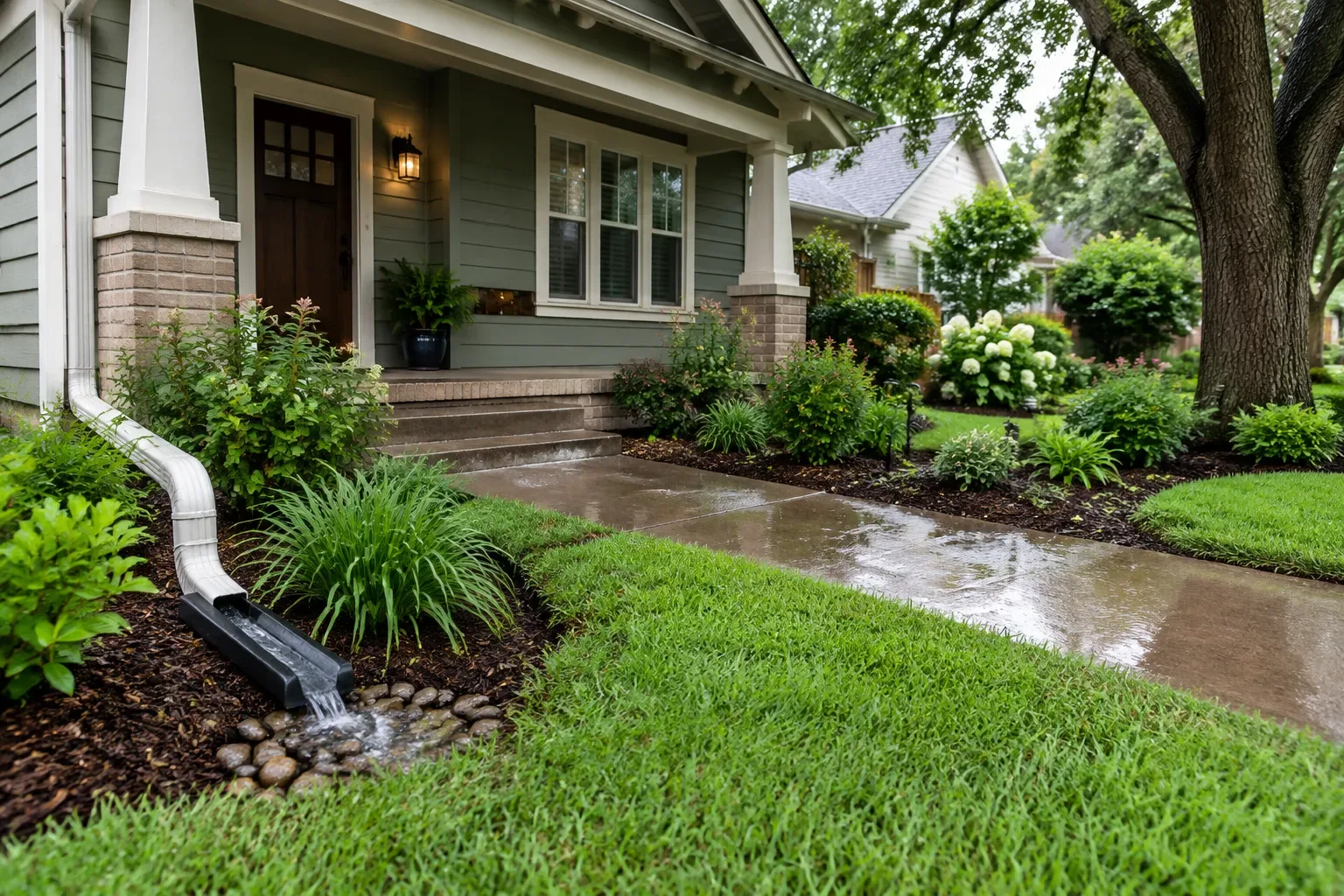
What Should Landscape Design Fix in Houston Heights Bungalows Near Heights Blvd?
Landscape design should fix how the yard functions before it changes how the yard looks. Around Houston Heights bungalows near Heights Blvd, that often means directing roof runoff away from the house, correcting low spots, making the front entry easier to reach, planning around mature trees and roots, and matching plants and irrigation to sun, shade, and heat exposure.
The best plan is site-specific. A small front yard may need a clearer walk and restrained planting that complements the facade, while the backyard may need drainage, privacy, or a more usable patio area. Houston Heights Landscaping can help homeowners evaluate those connected needs as part of an outdoor improvement plan.
Quick Answer
A useful bungalow landscape design should address water movement, safe access, turf or plant failures, irrigation coverage, tree-root constraints, privacy, and outdoor use. It should not assume that new mulch or replacement plants will cure ponding, a damp foundation area, structural movement, or flooding.
Start by identifying the visible symptom, then investigate plausible causes. Standing water is a symptom. A settled grade, poorly placed downspout, compacted soil, blocked drain, or larger drainage issue could be a cause. A professional site review can identify landscape-related findings, but foundation, plumbing, structural, arboricultural, or flood concerns may require the appropriate specialist.
Why should water movement come before planting?
Houston's heavy rain and generally flat terrain make small grade changes meaningful. Water that lingers beside a bungalow can saturate planting beds, damage turf, create muddy routes, and keep moisture close to the foundation. A landscape plan should follow the full route of water: roof edge, gutter, downspout outlet, lawn or bed, low point, drainage feature, and final discharge area.
Observe what actually happens after rain. Ponding near a bed does not prove that the bed is the problem, and a wet area beside the house does not prove a foundation defect. Check where downspouts release, whether soil has settled, whether a walk directs runoff toward the house, and whether a drain outlet has somewhere appropriate to send water.
For a larger landscape redesign, coordinate drainage decisions with paths, planting beds, and patio elevations rather than adding them as separate afterthoughts. Hardscaping services in Houston can be relevant when a new walkway, paver area, or edge needs to work with finished grades instead of interrupting drainage.
Ordinary landscape improvements are not a substitute for a flood assessment. If a property has broader flooding concerns, check applicable information from the Harris County Flood Control District and seek the right qualified professional for conditions beyond landscape grading.
What should a front yard solve without hiding the bungalow?
The front yard needs to support arrival. That means a walk that feels direct and stable, enough open space to see the entry, planting that does not crowd windows or pinch the route to the door, and a composition that fits the scale of the house.
Avoid treating every open area as a place for more shrubs. On a compact lot, oversized foundation plantings can make maintenance harder, conceal the facade, and compete with gates, meters, service access, or the walkway. A better design uses plant size at maturity, not nursery size, and leaves room for pruning, drainage, and air movement.
Privacy can also be useful, but it needs restraint. A dense screen may block an unwanted view while creating shade, reducing airflow, and taking up too much of a narrow side yard. Where the goal is separation rather than total enclosure, layered planting, an appropriately located fence, or selective screening can be more practical than a continuous tall hedge.
Which landscape fix matches the problem you see?
The right intervention depends on the condition being corrected, not on what is most visible from the street.
Regrading and downspout routing
Use this when runoff moves toward the house, pools in predictable low areas, or releases where people walk. It addresses water direction, but it may not resolve plumbing leaks, foundation movement, or floodplain conditions.
Planting beds and mulch
Use beds to organize the yard, manage exposed soil, and place plants by light and moisture conditions. They should not be used to bury a drainage problem or raise soil against the home.
Pavers and defined paths
Use a path or paver area where traffic creates mud, a side route is awkward, or a transition is unsafe. The elevation and edge details must still allow water to move as intended.
Turf replacement or artificial turf
Use this only after checking shade, compaction, drainage, irrigation coverage, and the grass type. Replacing struggling lawn without diagnosing those conditions can recreate the same failure in a new material.
For broader planning that combines beds, paths, turf, and outdoor-use areas, review the available landscaping services in Houston. The goal is not necessarily a full rebuild. Phasing the highest-impact fixes first is often the more sensible approach.
How do mature trees change a small-lot plan?
Mature trees can be an asset, but their canopy, roots, and shade divide a yard into different growing environments. A sunny strip near the curb may need a different plant palette and watering schedule than a shaded area under a canopy. Trying to force one lawn type, one planting list, and one irrigation schedule across the whole property often leads to thin turf, stressed plants, and unnecessary watering.
Root zones also affect construction choices. Excavation for drains, edging, tree planting, or irrigation should be planned around existing roots and service lines, rather than treated as a blank-site installation. Tree health or risk questions are outside a basic landscape diagnosis and may warrant an arboricultural professional.
Texas A&M AgriLife's landscape water-conservation guidance supports selecting and managing plants with actual site conditions and water needs in mind. In practical terms, that means matching plants to available light, soil moisture, and expected maintenance instead of relying on appearance alone.
When should irrigation be redesigned instead of simply repaired?
A sprinkler repair is appropriate when a known component is leaking, misaligned, or not operating correctly. Redesign is worth considering when the yard itself is changing, such as when lawn becomes planting beds, pavers replace turf, a new fence changes access, or tree shade alters water demand.
Irrigation zones should group areas with similar water needs and exposure. This is called hydrozoning, and it prevents a shaded bed from receiving the same schedule as a sunny lawn simply because they share one zone. Check for overspray onto sidewalks, structures, and paved areas, as well as missed coverage at bed edges.
For irrigation planning, sprinkler installation and repair in Houston can be coordinated with landscape changes rather than left until after beds and hardscape are installed. Weather-responsive scheduling can also limit unnecessary watering, as explained by the EPA's WaterSense guidance on labeled irrigation controllers.
What should you inspect before requesting a landscape design estimate?
Bring observations, not assumptions. A clear record of what happens in the yard makes it easier to prioritize work and distinguish an appearance problem from a performance problem.
- Photograph the front yard, back yard, side access, downspout outlets, low spots, damaged turf, and any area that holds water after rain.
- Note where sun and shade fall at different times of day, especially under mature trees and beside the house.
- Mark existing walks, gates, utilities you know about, drains, irrigation heads, trees, and places where routine maintenance is difficult.
- List the practical goals first, such as a drier path, a clearer entry, less turf maintenance, more privacy, or usable seating space.
- Identify any concern that may need another professional, including persistent indoor moisture, suspected plumbing leaks, unusual structural movement, or tree-risk questions.
A consultation can then sequence the work logically. Houston Heights Landscaping's service options include residential outdoor improvements such as drainage and gutters, flower beds, pavers, fencing, tree trimming, mulch, and landscape maintenance. For a site-specific conversation about a bungalow yard near Heights Blvd, use the consultation contact page.
Do historic or neighborhood rules affect front-yard changes?
They might, but that cannot be determined from proximity to Heights Blvd alone. Some Houston properties may be subject to district-specific preservation processes or other neighborhood requirements. The City of Houston Historic Preservation information is a useful starting point for confirming whether an address has applicable historic-preservation considerations.
Check before removing established front-yard features or committing to major paving, fencing, or exterior changes. Also confirm any separate deed restrictions, utility constraints, or site-specific requirements that may apply. This verification protects the design process from avoidable redesigns after materials or layouts have already been selected.
What is the most common landscape-design mistake on a bungalow lot?
Treating visible planting as the whole project is the costly mistake. Fresh plants, mulch, or decorative edging can make a yard look improved for a season while water still collects by the house, the walkway remains awkward, or the irrigation setup waters the wrong areas.
The practical takeaway is simple: solve movement first. Follow water, people, and maintenance routes through the property, then choose plants, turf, pavers, and privacy features that support those routes rather than work against them.
Ready to discuss your project?
Request a bungalow-yard consultation to sort out drainage, access, shade, and planting priorities near Heights Blvd.
FAQ
What should landscape design prioritize around an older Houston bungalow?
Prioritize water movement, safe walking routes, tree and utility constraints, and how the yard supports daily use. Planting and curb appeal matter, but they work best after the site has been evaluated for runoff, low spots, shade, access, and irrigation coverage. If the property shows persistent moisture indoors or signs of structural movement, that concern may need a qualified foundation, plumbing, or structural professional rather than a landscape-only solution.
Can landscaping stop water from collecting near my house?
It can help when the contributing condition is related to surface grading, downspout discharge, drainage routes, or low landscape areas. It cannot prove or correct every source of moisture. The useful first step is to observe where water begins, how it crosses the yard, and where it stops. If the issue involves a wider drainage system, plumbing, or flooding, the appropriate specialist should evaluate it.
Should I replace shaded grass with plants, pavers, or artificial turf?
First identify why the grass is failing. Dense shade, compacted soil, poor drainage, tree roots, irrigation gaps, or a grass-type mismatch can all contribute. Plants may be a better fit in some shaded areas, while a paver route can solve a traffic problem. Artificial turf is not automatically the answer, especially where drainage and base preparation have not been addressed. Explore landscaping options after the site conditions are clear.
How can I make a small front yard look better without blocking the house?
Keep the primary entry visible and preserve enough open space around the walk and facade. Choose plants for their mature size, use layers instead of a continuous wall of shrubs, and avoid placing tall or wide material where it will cover windows or narrow access. A simple path improvement, defined bed edge, and appropriately scaled plant palette can be more effective than filling every open area.
Do I need a new sprinkler system when I redo my landscaping?
Not always. Existing irrigation may only need repairs, head adjustments, or zone changes. A redesign becomes more likely when turf areas are converted to beds, new hardscape changes spray patterns, or sun and shade conditions vary sharply across the lot. A review of sprinkler installation and repair can help determine whether repairs and adjustments are enough.
Can new pavers make drainage worse?
They can if their finished height, slope, edges, and surrounding grades are not planned together. A path or patio should move people comfortably without redirecting roof runoff toward the house or trapping water at an edge. Before selecting a paver pattern or size, confirm where water will travel during rain and how the new surface connects to nearby beds, lawn, and drains.
Are homes near Heights Blvd automatically subject to historic-district rules?
No. Being near Heights Blvd does not establish a property's designation or applicable rules. Requirements can depend on the exact parcel and the nature of the proposed change. Before making a major front-yard alteration, fence installation, or paving decision, verify the address-specific situation through relevant City information and any applicable neighborhood documentation.
What should I bring to a landscape consultation for a bungalow yard?
Bring photos taken after rain, a list of the areas you use most, and notes about where grass dies, mud develops, or irrigation misses. It also helps to identify desired outcomes, such as a better entry route, more privacy, reduced maintenance, or a usable seating area. Include known utility locations and any concerns already raised by another professional so the outdoor plan can account for them.