What Should Landscape Design Preserve on Garden Oaks Lots Near Ella Blvd?
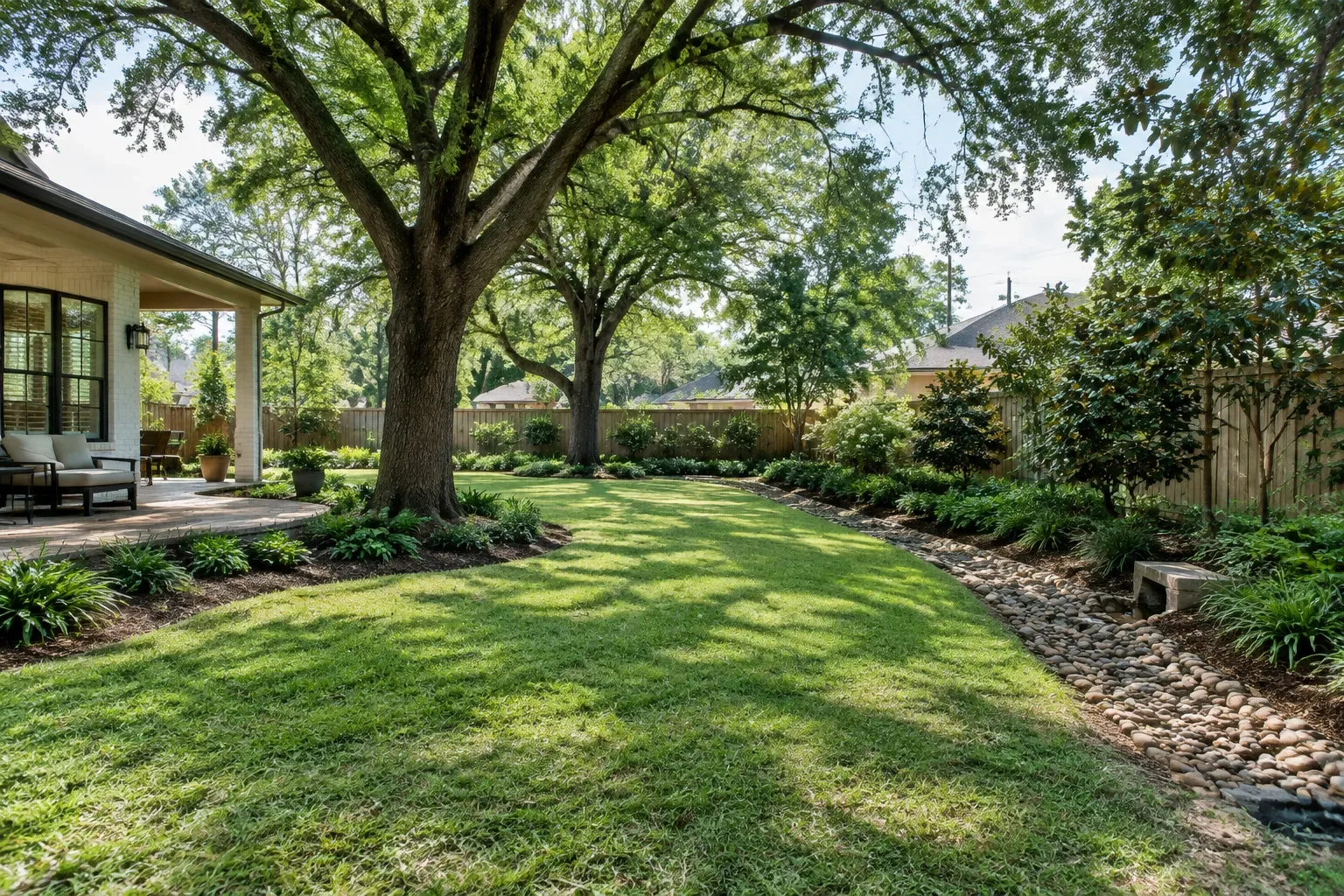
Before changing a Garden Oaks yard near Ella Boulevard, preserve the features that already make the property functional: healthy mature trees and shade, working drainage paths, usable open space, privacy screening, sound hardscape, healthy soil, and clear service access. The best design starts with an on-site inventory, not a planting list.
Not every existing feature deserves to stay. A thoughtful plan separates what is healthy and useful from what needs pruning, repair, relocation, or replacement. That approach helps new beds, pavers, turf, irrigation, and outdoor living areas fit the lot instead of creating water, access, or maintenance problems later.
Quick Answer
Preserve valuable canopy, runoff routes, permeable planted areas, established privacy features, practical lawn or gathering space, and access to the home and outdoor equipment. Document these features before design work begins, then decide what to retain, improve, move, or remove based on the actual site.
For a property-specific starting point, Houston Heights Landscaping provides residential landscaping and outdoor improvement services in Houston.
Which existing features deserve a preservation review?
A landscape is more than the plants visible from the street. Some features quietly control comfort, drainage, maintenance, and how easily future work can be completed. Before selecting new materials or plants, sort the site into four practical categories.
Preserve as-is
Healthy mature trees, stable walkways, well-placed shade, established lawn, and drainage routes that work may be the strongest assets on the lot. Protect them from unnecessary disturbance.
Preserve with maintenance
A shrub screen, tree canopy, fence-adjacent planting, patio, or irrigation zone may remain useful after pruning, repair, cleanup, or coverage adjustments.
Modify or relocate
A bed that blocks access, a downspout that discharges in the wrong place, or a small planting in the path of a new walk may need a targeted change rather than removal.
Remove or replace
Declining plants, failing materials, invasive growth, poorly located features, and elements that trap water or obstruct service access can be candidates for replacement.
This framework prevents a common mistake: treating every old element as either untouchable or disposable. Selective preservation usually creates a more coherent result than clearing the entire yard or trying to save every existing planting.
Why should mature trees and shade come before the plant palette?
Established shade changes how people use an outdoor space and how new plants perform. In Houston's hot, humid growing conditions, canopy cover can reduce sun exposure in seating areas, help moderate soil temperature, and affect how much irrigation a planting area needs. Removing a mature tree can turn a shade garden into a high-sun bed with very different plant and maintenance requirements.
Tree preservation is also a construction issue. Grading, trenching for irrigation, paver installation, repeated equipment traffic, and added soil can disturb roots or compact the soil around them. Root zones are not limited to the narrow area immediately beside the trunk, so the tree location, canopy spread, likely root area, and construction route should all be mapped before installation begins.
A tree should not automatically be retained because it is large, nor removed simply because it complicates the layout. Visible concerns such as dead limbs, lean, surface roots, or crowded branches are observations, not a diagnosis. An arborist assessment is appropriate when tree health, structure, or work near a valuable tree is in question.
How should drainage shape the design before beds or pavers are added?
Water movement should be documented before aesthetic changes are drawn. During short, intense rain, runoff may travel from roof downspouts, driveways, neighboring properties, patios, sidewalks, and low areas toward a single part of the yard. A new bed, fence, turf section, or hardscape feature can redirect that flow if it blocks a swale, covers a permeable area, or changes the grade.
Vegetation, healthy soil, and permeable areas can slow, filter, capture, or infiltrate stormwater, as described by the EPA's overview of green infrastructure. That does not mean every planted area solves every drainage problem. It means existing soil and planted space may have a functional role worth understanding before it is replaced with impervious material.
Observe where water enters, crosses, and exits the property. Note downspout outlets, low spots, surface channels, standing water after rain, and any place where runoff approaches the foundation, gate, patio, or neighboring property. Because driveways, roofs, patios, street drainage, and adjacent lots can affect each site differently, a generic layout is not a substitute for watching the actual lot.
If the plan involves notable grade changes, recurring standing water, work close to a structure, or uncertain runoff paths, a drainage evaluation may be needed before installation. For designs that include new planting, lawn, and pathways, Houston landscaping services can help connect the visual plan to the site's existing conditions.
What open space, privacy, and access should stay usable?
The most attractive redesign can become frustrating if it removes the space the household actually uses. Before converting lawn to beds or hardscape, identify where people walk, where pets or children use the yard, where trash bins move, which gates need clearance, and where outdoor gatherings happen. Leave room for the uses that matter now and for flexibility later.
Privacy deserves the same review. Mature shrubs, hedges, and fence-line plantings can provide screening that would take years to replace. They may need thinning, pruning, or selective replacement, but removing them without a replacement sequence can leave an exposed yard for several growing seasons.
Keep practical access open to foundations, gates, HVAC equipment, electrical components, irrigation controls, cleanouts, and other serviceable areas. A planting bed should frame these features without burying them or making routine maintenance harder. Before revising a patio, walkway, or paver area, review hardscaping options in Houston in the context of drainage, tree roots, and access routes.
Why should healthy soil and permeable areas be protected during installation?
Good soil is a working part of the landscape, not just material beneath plants. It supports roots, holds moisture, and helps water move into the ground rather than race across the surface. Heavy equipment, repeated traffic, unnecessary excavation, and stored materials can compact soil, reducing pore space that roots and water need.
The USDA Natural Resources Conservation Service explains that soil health is tied to soil structure, organic matter, infiltration, and reduced compaction in its soil health guidance. On a residential lot, this supports a straightforward planning choice: protect healthy planting areas where possible, and avoid treating the entire yard as a construction staging zone.
Preservation does not mean leaving compacted or poor-performing soil unchanged. A design may call for soil improvement, mulch, selective regrading, or replacement planting. The goal is to avoid damaging healthy soil while correcting areas that are already limiting plant performance or drainage.
How do irrigation and utilities affect what can be preserved?
Existing irrigation can be an asset if it covers the areas that will remain planted, but a redesign often changes watering needs. A former lawn zone may not water a new shrub bed efficiently, and established trees should not be treated like shallow-rooted annuals. Map sprinkler heads, valves, controllers, visible drip lines, and spray patterns before new beds, turf, or hardscape are installed.
An irrigation review should also consider coverage gaps, overspray onto paving, damaged heads, and whether different plant areas need different watering schedules. Readers planning that work can review sprinkler installation and repair in Houston alongside the overall landscape plan.
Utilities and service equipment require the same care. Before digging or installing posts, edging, pavers, drainage components, or irrigation lines, identify visible equipment and arrange appropriate utility locating when underground lines may be affected. A landscape designer can observe conflicts, but the location of buried utilities must be confirmed through the appropriate process.
What is the best pre-design process for an established lot?
Start with what the property is doing today. Take the inventory on a dry day, after rainfall if possible, and at more than one time of day to understand sun and shade.
- Photograph the front yard, backyard, side yards, gates, fences, patios, walkways, downspouts, utility equipment, existing beds, and lawn areas.
- Mark mature trees, major shrubs, shade patterns, low spots, surface runoff paths, irrigation components, and access routes on a simple sketch or survey.
- Identify household priorities, such as outdoor dining, pet space, play area, privacy, gardening, lower maintenance, or a clearer path to the entrance.
- Label each feature preserve as-is, preserve with maintenance, modify or relocate, or remove and replace.
- Coordinate proposed beds, turf, pavers, fencing, and outdoor features with drainage, root protection, utilities, and service access before construction starts.
- Seek added expertise when the work is close to mature trees, structures, utilities, easements, or significant grade changes.
Texas A&M AgriLife's Earth-Kind landscaping guidance is also useful for thinking about resource-conscious plant selection and long-term maintenance. Plant choices should follow the preserved conditions, especially sun, shade, drainage, and expected irrigation, rather than force the site to support an unsuitable palette.
When is replacement better than preservation?
Preserving everything can be as costly as removing everything. Replacement may be the better choice for plants in chronic decline, beds that repeatedly hold water, a deteriorated fence-adjacent screen, hardscape that creates a trip hazard, or a layout that blocks access and cannot be corrected reasonably.
The realistic alternative to wholesale removal is selective replacement. Retain healthy canopy and workable open areas while replacing only the plants, materials, or layout features that are failing. Landscape service options can help homeowners think through related work such as planting, mulch, tree trimming, drainage, fencing, pavers, and maintenance as parts of one coordinated plan.
The most common mistake is designing from a single photo or a list of desired materials. A site may look ready for a large paver area, dense hedge, or expanded turf zone, yet its runoff, shade, roots, or access needs may point to a smaller or differently placed solution.
What should you bring to a landscape design consultation?
Bring recent photos, a rough property sketch or survey if available, notes about where water stands or flows, a list of features you want to keep, and a list of problems you want solved. Mention planned changes such as a patio, fence, tree work, drainage correction, or irrigation update so they can be considered together rather than added as afterthoughts.
The practical takeaway is simple: preserve the site functions that are working before investing in new appearance. On an individual Garden Oaks lot near Ella Boulevard, the right design begins by verifying what the trees, soil, runoff, and usable space are already doing.
For a site-specific discussion of what to retain, improve, or replace, request a landscape consultation with Houston Heights Landscaping.
Ready to discuss your project?
Discuss which trees, drainage paths, and usable spaces to preserve on your Garden Oaks property near Ella Boulevard.
FAQ
Should I keep mature trees when redesigning my Garden Oaks yard?
Keep mature trees when they are healthy, structurally sound, compatible with the intended use of the yard, and can be protected during construction. Their shade can influence comfort, plant choices, and irrigation needs. Do not assume that a large tree is automatically safe or automatically a removal candidate. If planned excavation, paving, or visible tree concerns are involved, obtain a qualified tree assessment before finalizing the layout.
Can new pavers cause drainage problems in a yard?
They can. Pavers and their base can alter how surface water moves, especially if they cover a low area, narrow an existing drainage route, or sit near downspout discharge. The issue is not that pavers are always unsuitable. The design should account for existing grades, runoff entry points, drainage outlets, and adjacent planted or permeable areas before the footprint and elevation are chosen.
What plants should I preserve before a landscape renovation?
Preserve healthy, well-sited plants that provide shade, privacy, seasonal interest, or a mature structure that would take years to replace. Evaluate each plant for health, spacing, drainage fit, maintenance needs, and conflicts with future paths or structures. Plants struggling because of poor drainage, inadequate light, crowding, or disease may be better moved or replaced than repeatedly maintained in the wrong conditions.
Do I need to change my sprinklers if I change the landscape?
Often, yes. A redesigned yard can shift water needs from broad turf coverage to separate zones for shrubs, flower beds, or newly planted areas. Existing heads may also end up spraying hardscape or missing new plantings. An irrigation review and sprinkler service can help determine whether the system needs adjustment, repair, or expansion after the final layout is set.
How do I protect tree roots during landscaping work?
Map the tree location and likely root area before selecting excavation routes, paver edges, irrigation trenches, or equipment staging areas. Avoid unnecessary digging, repeated vehicle traffic, soil stockpiles, and grade changes near valuable trees. Because root extent and tree condition cannot be confirmed from a photo alone, work near a mature tree may warrant an arborist's input before installation begins.
Should I keep an old lawn area or turn it into flower beds?
Keep lawn where it serves a real purpose, such as play, pet use, gatherings, walking routes, or flexible open space. Convert areas that are unused, difficult to mow, poorly shaped, or better suited to planting after drainage and shade are reviewed. The decision should reflect how the household uses the yard, not a rule that lawns or flower beds are always preferable.
What should I document before meeting with a landscape designer?
Document sun and shade, runoff after rain, standing-water areas, trees and major shrubs, fence lines, patios, walkways, gates, utility equipment, irrigation parts, and the paths people use. Include photos from several angles and notes about recurring maintenance problems. You can also review recent project information to help clarify the kinds of outdoor improvements you want to discuss.
Can I preserve privacy screening while replacing a fence?
Often, but it requires staging. Existing shrubs or small trees near a fence may need protective measures, selective pruning, or temporary access planning so installation does not damage roots or branches. In some cases, partial replacement or a new planting sequence makes more sense than removing all screening at once. Review fence access, drainage, and the mature size of nearby plants before scheduling the work.