Why Does Landscape Design Matter for Bayou-Edge Yards Near W 20th St in Lazybrook?
Landscape design matters because it coordinates the parts of a yard that affect one another: where rainwater travels, where people walk, which plants can thrive, and how irrigation supports them. For yards near W 20th St in Lazybrook, a thoughtful plan can help avoid common conflicts such as a new planting bed blocking a drainage route or a patio sending runoff toward a low spot.
It is not a guarantee against bayou flooding or regional stormwater problems. It is a practical way to make lot-level choices about grading, beds, turf, hardscape, and watering based on the property’s actual conditions. Houston Heights Landscaping provides residential landscaping and outdoor-improvement services in Houston and surrounding neighborhoods.
Quick Answer
A good landscape design gives water, plants, and people intentional places to go. It starts by observing slopes, downspouts, low areas, shade, roots, utilities, and access routes, then uses those findings to place lawn, planting beds, walkways, mulch, irrigation, and drainage features sensibly.
For a yard near a bayou corridor, the central question is not simply which plants look best. It is how the proposed improvements will preserve existing drainage paths and perform after a heavy rain. The right scope may be a targeted bed redesign and irrigation adjustment, not necessarily a full-yard rebuild.
How does a landscape plan help water move through the yard?
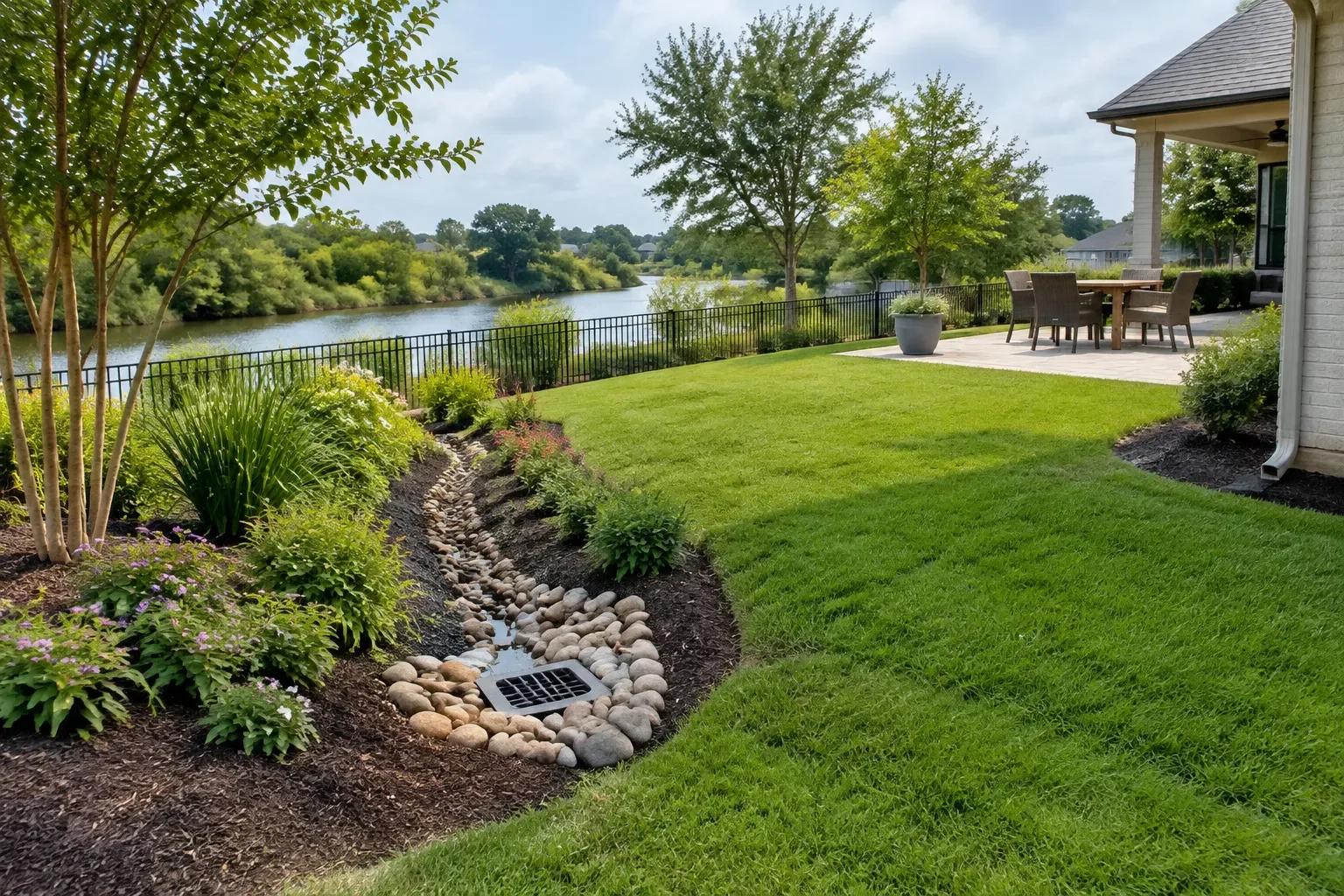
Heavy rainfall can expose design problems that stay hidden during dry weather. Water may enter from roof downspouts, adjacent lots, compacted areas, or low sections of the property. A site plan maps where it enters, ponds, travels, and exits before materials are selected.
That sequence matters near a bayou because elevated water levels or runoff from surrounding properties can slow drainage in some circumstances. The appropriate response depends on actual site elevations and flow patterns, not on the neighborhood name alone. A plan should avoid creating barriers that trap water and should not redirect runoff toward a neighboring property or public right-of-way.
An observable symptom, such as water remaining in one lawn area after rain, does not prove a single cause. It could relate to compaction, a blocked drainage component, roof discharge, poor finished elevations, or a condition beyond ordinary landscaping. A professional finding requires an on-property review.
Which parts of the yard need different design decisions?
Treating the entire yard as one surface often leads to overwatering, awkward access, and planting failures. Dividing it into functional zones makes decisions clearer.
Wet or low areas
These areas need a confirmed drainage path before planting or adding hardscape. Plant choices should match the observed moisture and sunlight, rather than relying on appearance alone.
Sunny lawn areas
Grass can work where traffic, sun exposure, and drainage support it. Separate irrigation zones help avoid watering turf on the same schedule as lower-water planting areas.
Shaded areas beneath trees
Mature roots, shade, and limited access can narrow the plant palette and affect installation methods. Soil additions, edging, or grading should not damage roots or create water against a structure.
Patios and walkways
Finished elevations, surface runoff, access, and slip resistance belong in the design before installation. Pavers need a properly prepared base and an intentional strategy for water leaving the surface.
For patios, paths, and other built surfaces, review hardscaping options in Houston as part of the larger yard plan, not as an isolated upgrade. A beautiful walkway that interrupts drainage can create a more expensive correction later.
Why should drainage be planned before beds, turf, or pavers?
Drainage is the framework that lets the visible elements perform as intended. Once a bed edge, fence, turf area, or patio is installed, changing elevations or accessing buried drainage components can become more disruptive.
A design review can identify practical constraints, including compacted soil, mature tree roots, existing utility lines, older drainage components, and narrow side-yard access. These are possible site conditions on urban lots, not assumptions about any specific Lazybrook property.
Artificial turf also deserves a drainage-first review. Subgrade preparation, permeability, edge restraint, heat exposure, pet use, and the exit path for surface water all affect whether it is suitable for a given area. The same principle applies to mulch: it can help moderate soil moisture and reduce exposed soil, but it should not block vents, cover foundations, or hold water against structures.
What should you observe after the next heavy rain?
A rain observation is often more useful than guessing from a dry yard. Take photos or notes only from safe areas, and do not enter standing water or fast-moving drainage channels.
- Note where roof downspouts release water and whether that water reaches a planting bed, walkway, or low point.
- Mark where puddles form, how far they extend, and which areas drain first.
- Look for runoff crossing paths, washing mulch, exposing soil, or collecting against fences, patios, or the home.
- Record sun and shade patterns after the rain, especially where you are considering grass, beds, or outdoor seating.
- Share the observations with a landscape professional before finalizing materials or finished elevations.
This information helps distinguish a visual preference from a functional need. It also gives a contractor a better starting point for discussing landscaping services in Houston that may fit the site.
How do plants and irrigation fit a Houston yard plan?
Plant selection should account for sun exposure, soil moisture, mature size, root behavior, and the maintenance the household actually wants to provide. Houston’s hot, humid growing conditions make a generic planting palette less reliable than a site-specific selection and care approach.
Watering needs should follow those zones. Lawn, new planting beds, established shrubs, and shaded areas rarely benefit from one identical schedule. The U.S. Environmental Protection Agency’s WaterSense landscape guidance supports coordinating plant choices, soil practices, and irrigation to reduce unnecessary outdoor water use. Texas A&M AgriLife Extension’s Earth-Kind Landscaping guidance likewise emphasizes considering plants, soil, and water together.
If sprinklers are part of the plan, the layout should serve the chosen zones rather than force every area into the same watering pattern. Explore sprinkler installation and repair in Houston when irrigation coverage, repairs, or zone changes are part of the discussion.
What happens during a useful landscape-design consultation?
The most productive consultations turn broad goals, such as “less mud” or “more privacy,” into a sequence of decisions. The discussion should cover how the yard is used, what happens after rain, desired maintenance, budget priorities, access limitations, existing trees, and any known utilities or drainage components.
A complete concept may identify proposed materials, plant quantities, drainage or irrigation components, installation phases, and ongoing maintenance expectations. For ideas about the range of outdoor improvements that can be coordinated, see the company’s latest project page.
Some issues require a separate technical review. Structural drainage concerns, floodplain questions, retaining walls, electrical work, gas lines, and other specialized scopes should be evaluated by the appropriate qualified professional or authority. Landscape design is useful coordination, but it is not a substitute for civil engineering or a flood determination.
What is the most common mistake in a wet-yard makeover?
The common mistake is selecting the finish before understanding the flow of water. Installing attractive plants, pavers, or turf without confirming grades and drainage routes can conceal a problem briefly while making it harder to correct.
A better takeaway is simple: observe water first, then design the visible improvements around its path. That approach creates a yard that is easier to use and more realistic to maintain through changing weather.
Ready to discuss your project?
Request a landscape consultation to evaluate drainage, planting, and outdoor-use priorities for your yard near W 20th St.
FAQ
Can landscape design stop my Lazybrook yard from flooding?
No. Landscape design cannot guarantee protection from bayou flooding, severe regional storms, or failures in public drainage systems. It can help improve how water is handled on the lot by preserving flow paths, coordinating downspout discharge, and avoiding features that trap runoff. If flooding or structural water intrusion is a concern, seek the appropriate drainage, engineering, or floodplain guidance for the property.
What should I do if water sits in my yard after rain?
First, document where the water sits, how long it remains, and where roof downspouts release water. Standing water is a symptom, not a diagnosis. Compacted soil, a low spot, blocked drainage, grading, or runoff from elsewhere can all contribute. A site review can determine whether the practical next step is planting changes, grading, drainage work, irrigation changes, or another specialist.
Are pavers a bad choice for a wet Houston yard?
Not automatically. Pavers can be appropriate when the base, finished elevation, edge restraint, and water-management strategy are designed for the location. They are a poor fit when they block a needed drainage route or are installed over an unprepared base. Review Houston landscaping service options alongside the intended use of the patio or walkway and the observed drainage pattern.
What plants work best near White Oak Bayou?
There is no single plant list that fits every nearby property. Choose plants based on the actual sunlight, soil moisture, mature size, root behavior, and maintenance commitment in each zone. A site may have dry shade under trees, sunny lawn areas, and wetter low sections all at once. Avoid assuming a property has bayou-related wet soil without observing and evaluating that specific area.
Should I install artificial turf where grass keeps failing?
Artificial turf can be worth considering, but it is not a universal answer to grass failure. Confirm why grass is struggling first: shade, compaction, poor drainage, traffic, irrigation coverage, or another factor may be involved. Turf still needs proper subgrade preparation and a way for surface water to leave. Heat exposure, pets, edges, and maintenance should also factor into the decision.
Do I need an irrigation system for new landscaping?
Not every project requires a new system, but new plants need a realistic establishment-watering plan. A review can determine whether existing coverage matches the new zones or whether repairs, adjustments, or additional irrigation are useful. Sprinkler service planning is especially relevant when lawn and planting beds will have different watering needs.
How can I make a yard easier to maintain in Houston’s heat and humidity?
Start by matching plants to sun, shade, and soil moisture instead of choosing only by color. Group areas with similar water needs, provide practical access for pruning and mulch, and avoid overcrowding plants based on their small installation size. A lower-maintenance plan is not necessarily minimal planting. It is a layout whose care needs fit the household’s available time and preferred level of upkeep.
What should I ask before hiring a landscape designer near W 20th St?
Ask how the site will be assessed after rain, how proposed work preserves drainage routes, and how irrigation, planting, patios, and access will work together. Request clarity on materials, plant quantities, installation phases, and ongoing maintenance. Also ask which issues may need another professional, such as retaining walls, electrical work, gas lines, floodplain questions, or structural drainage concerns.